Showing posts with label Vera-Ellen. Show all posts

Sunday, December 18, 2022

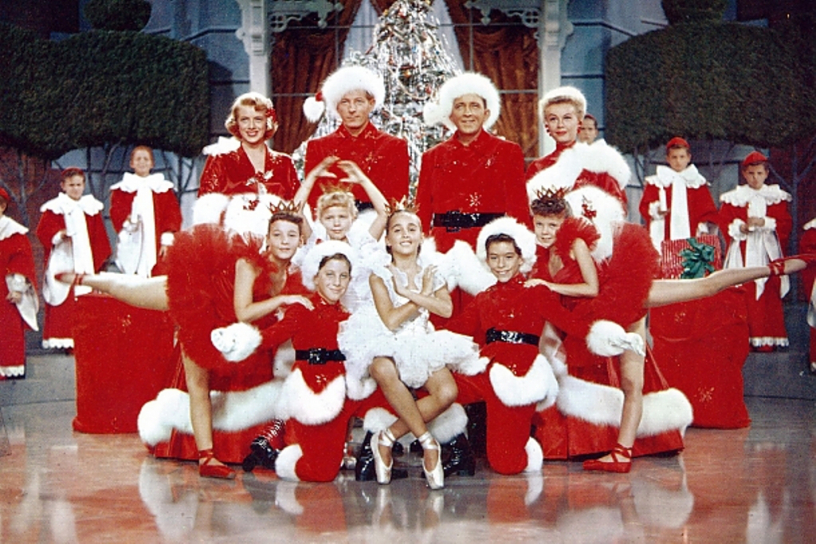
HOLIDAY INN VS WHITE CHRISTMAS


This is a well written comparison of Holiday Inn and White Christmas. I recommend not only reading this article but visiting this great blog from a fellow movie lover...


It’s hard to shoot down the movie that brought us the song, “White Christmas,” (talking about Holiday Inn), but it’s not thought of as a classic in the way White Christmas is. Both star Bing Crosby, both take place more or less around a hotel/inn, and both are full of music and a little dancing. If it wasn’t for Holiday Inn, there wouldn’t be a White Christmas movie, but White Christmas goes farther and leaves us with that warm, fuzzy feeling.

Holiday Inn revolves around Jim Hardy (Bing Crosby) wanting to leave show business for the “good life” where he doesn’t have to work much. He opens an inn which is only open on holidays and gets a pretty girl to perform there for him. When Ted Hanover (Fred Astaire) shows up, he wants the girl as his new dance partner, which would take her away from the inn and Jim, who loves her. It’s a bit stale, and has song and focuses too long on dance routines for holidays such as Abe Lincoln’s Birthday, Washington’s Birthday, Valentine’s Day, Independence Day. Though we think of it as a Christmas movie, there’s not a lot of Christmas in it.


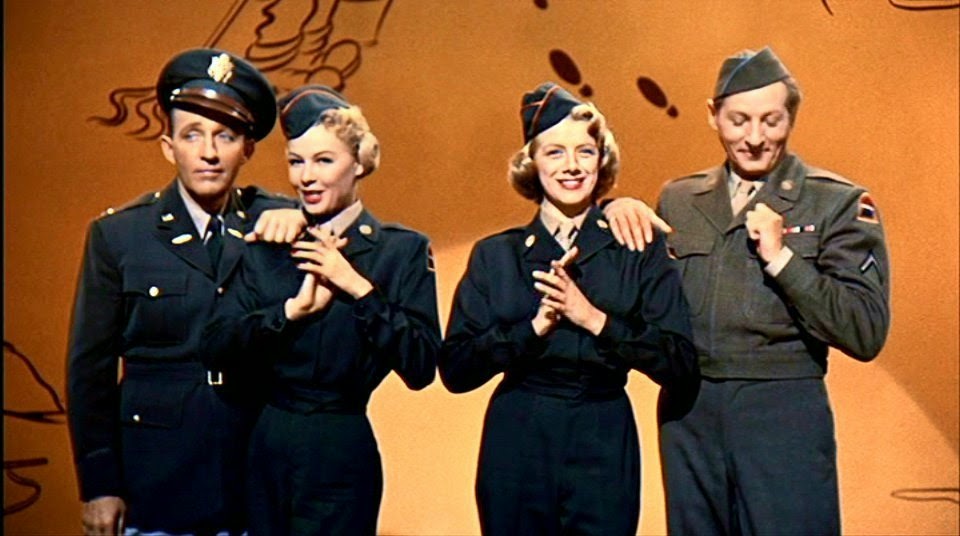
White Christmas, on the other hand, takes place in the days leading up to Christmas. After WWII, song and dance act Wallace and Davis (Crosby and Danny Kaye) meet up with a sister act (Rosemary Clooney and Vera-Ellen) who are on their way to Connecticut. When they arrive there, they find their old army sergeant struggling to make ends meet at an old ski lodge when it’s too warm for snow, so they decide to help out by moving the act out there. In the meantime, there’s music and dancing and a little romance. And then it starts to snow.

White Christmas gives us that feeling that only comes once a year whereas Holiday Inn seems more like a farce – trying to pack in as much singing and dancing without a whole lot of plot. Without the one, we wouldn’t have the other, but we don’t need both. Sorry, Holiday Inn, but I’m dreaming of a White Christmas...


Sunday, December 15, 2019

THE MAKING OF WHITE CHRISTMAS

It took Hollywood nearly 15 years to craft the cheerful and unabashedly sentimental musical White Christmas out of Irving Berlin’s hit song. But the 1954 movie starring two of America’s most popular stars—Bing Crosby and Danny Kaye—was worth the wait, becoming the biggest box office hit of 1954 and to this day consistently ranking on lists of classic holiday movies.

Bing Crosby first performed the song “White Christmas” on his CBS radio show on Christmas Day in 1941. He reprised it in the 1942 film Holiday Inn, in which he starred with Fred Astaire, when his character impresses a love interest by crooning a new song he’d just written called “White Christmas.” It impressed the Academy too, winning the Oscar for Best Song. The song hit the charts and became the all-time best-selling single for over 50 years. (Until Elton John’s tribute to the late Princess Diana, “Candle in the Wind,” finally took that honor.)

So it seemed a no-brainer to build another movie around the hit song. Irving Berlin wrote new songs and repurposed some earlier ones, and a story was strung together featuring a male song-and-dance act and singing sisters on their way to a Vermont inn run by a general the men knew from the war. The set for the Vermont Inn appears in both Holiday Inn and White Christmas. By the time principal photography began, Paramount had acquired the new wide-screen Technicolor and VistaVision technologies, which would show off the song and dance numbers in vibrant color.


White Christmas was supposed to reunite Bing Crosby with Fred Astaire, who’d appeared together in both Holiday Inn and Blue Skies (1946). But there was a snag: Fred Astaire didn’t like the script and refused to participate. Paramount replaced him with Donald O’Connor (who’d later gain acclaim as Cosmo the piano player in Singin’ in the Rain), but when O’Connor fell ill right before production was to begin, he had to pull out. Desperate for a replacement, Paramount contacted Danny Kaye, who asked for, and received, a then unheard-of fee: $200,000 plus 10 percent of the gross.

“It is the first movie that I’ve been connected with since Holiday Inn that has the feel of a Broadway musical,” an excited Berlin wrote to his friend Irving Hoffman as production began.

As the song-and-dance team, Crosby and Kaye had fun together, improvising on set, as did the singing sisters played by Vera-Ellen and Rosemary Clooney (yes, the cousin of George). The classic number “Sisters,” in which Crosby and Kaye vamp around waving blue-feathered fans, wasn’t even in the original story. But the actors were goofing around on set, and director Michael Curtiz found their capers so funny, he wrote them in. The actors kept cracking up during the take, but everyone loved the authenticity of the moment, so the laughter stayed. The scene where Crosby’s character tells Clooney’s his theory of what foods cause which dreams before launching into “Count Your Blessings” was almost completely improvised. Crosby even made up words like “weirdsmobile.”


Rosemary Clooney, a trained vocalist, sang her own songs in the movie, and sometimes those of her co-star Vera-Ellen. (The other vocalist covering Vera-Ellen’s songs was Trudy Stevens). Vera-Ellen came to White Christmas an accomplished dancer—at 18 she’d been one of the youngest Radio City Rockettes. Danny Kaye could cut the rug, but wasn’t nearly as nimble on his feet as Vera-Ellen, and toward the end of “The Best Things Happen When You’re Dancing,” he accidentally tripped her. (Luckily he caught her gracefully, saving the take.) Though he wasn’t the principal choreographer, Bob Fosse, who would go on to create the distinctive dance moves in Chicago, Cabaret, and All That Jazz, staged some of the dance numbers.

While the public adored the sweetly good-natured musical, some critics felt it was too saccharine. Bowley Crowther wrote a harsh review in The New York Times on October 15, 1954, saying, “The confection is not so tasty as one might suppose. The flavoring is largely in the line-up and not in the output of the cooks. Everyone works hard at the business of singing, dancing and cracking jokes, but the stuff that they work with is minor.”

But audiences didn’t care. White Christmas took in $12 million, the biggest box office hit of the year. And it endures as a heart-warming Christmas classic to revisit at this time of year. Even the New York Times admitted it was a good-looking film, saying, “The colors on the big screen are rich and luminous, the images are clear and sharp, and rapid movements are got without blurring.”

Sunday, December 23, 2018

BING ON FILM: WHITE CHRISTMAS - PART TWO


The song "Snow" was originally written for Call Me Madam with the title "Free," but was dropped in out-of-town tryouts. The melody and some of the words were kept, but the lyrics were changed to be more appropriate for a Christmas movie. The song "What Can You Do with a General?" was originally written for an un-produced project called Stars on My Shoulders.

Trudy Stevens provided the singing voice for Vera-Ellen, who did not have a suitable singing voice. It was not possible to issue an "original soundtrack album" of the film, because Decca Records controlled the soundtrack rights, but Clooney was under exclusive contract with Columbia Records. Consequently, each company issued a separate "soundtrack recording": Decca issuing Selections from Irving Berlin's White Christmas, while Columbia issued Irving Berlin's White Christmas. On the former, the song "Sisters" (as well as all of Clooney's vocal parts) was recorded by Peggy Lee, while on the latter, the song was sung by Rosemary Clooney and her own sister, Betty.

Berlin wrote "A Singer, A Dancer" for Crosby and his planned co-star Fred Astaire but when he was unavailable, Berlin re-wrote it as "A Crooner – A Comic" for Crosby and Donald O'Connor, but when O'Connor left the project so did the song. Another song written by Berlin for the film was "Sittin' in the Sun (Countin' My Money)" but because of delays in production, Berlin decided to publish it independently.] Crosby and Kaye also recorded another Berlin song ("Santa Claus") for the opening WWII Christmas Eve show scene, but it was not used in the final film. Their recording of the song survives though, and the song is cute but not great.


One of the greatest moments of the film is a bit Bing and Danny Kaye did off the cuff. According to Rosemary Clooney, Bing and Danny’s “Sisters” performance was not originally in the script. They were clowning around on the set, and director Michael Curtiz thought it was so funny that he decided to film it. In the scene, Crosby’s laughs are genuine and unscripted, and he was unable to hold a straight face. Clooney said the filmmakers had a better take where Crosby didn’t laugh, but the version with Crosby laughing was one that they used.

I find myself always comparing White Christmas to Holiday Inn, and I think that is unfair. The movies were done a decade apart and movie musicals were much different in 1954 than 1942. I prefer Holiday Inn, but I have a much better appreciation for White Christmas now that I have seen the film in a move theater. From the understated performance of Dean Jagger as the retired general to the superb dancing of Vera-Ellen to the banter of Crosby and Kaye, White Christmas is really a great film. Yes, the film is sentimental and cheesy at times. While I went to see the film in a theater my wife and kids ran errands, and I am glad. I had tears in eyes at the end when the general was recognized and realized he was not forgotten. I think that is a sign of a great movie that a movie made more than 60 years ago can still evoke emotion in 2017. At the end of the movie screening, the audience stood up and applauded, and I smiled to myself and thought of what a great Christmas gift this film was and is. Thanks again Bing!

MY RATING: 10 OUT OF 10


Tuesday, December 11, 2018

BING ON FILM: WHITE CHRISTMAS - PART ONE

I had the the great opportunity to see 1954’s White Christmas in a movie theater a couple of days before Christmas in 2017. I actually fulfilled one of my bucket list items by seeing a Bing Crosby movie in a theater. I had never had the pleasure of seeing one like that before. I have to admit that White Christmas has never been my favorite Crosby film. I thought the story was contrite, and I did not care for the pairing of Bing with funny man Danny Kaye. However, upon seeing this movie in the theater, I have a completely new appreciation for the film.

The beloved classic that everyone watches during the holiday season is a lot different from what was proposed in the beginning. At first, Bing Crosby turned down the role due to the recent death of his wife Dixie Lee. However, Bing knew working on a musical with Irving Berlin tunes was destined to be a hit so he signed. Bing had co-star approval, and had wanted Fred Astaire for the role of his Army buddy. Crosby and Astaire had previously starred in Holiday Inn (1942) and Blue Skies (1946) earlier. Astaire read the script, but he then turned it down. The last movie that Astaire had made for Paramount was the 1950 disastrous musical Let’s Dance with Betty Hutton, and by 1954 Astaire was really being choosy on what roles he was accepting at that point. Next Bing wanted to work with dancer Donald O’ Connor again. Donald had played Bing’s younger brother in an earlier Paramount musical Sing You Sinners in 1938, and Bing and Donald had work together on radio shows since then. O’Connor was all set to be in the film, until he broke his ankle right before film rehearsals were set to begin. This sent Paramount scrambling, and they came up with the idea of pairing Bing with comedian Danny Kaye.


Even though Kaye was third choice for the film, he had this to say about Bing:

"I loved to work with him. I had the feeling he was my close personal friend. The real truth is that everybody knows Bing, but no one knows him. Through the years, he has created a legendary character that is so vivid, no one knows where the legend begins and the real Crosby leaves off. I thought I knew Bing--thought I knew all about him until we started to make White Christmas. Then I realized I actually didn't know the man at all. The truth of the matter is, there isn't a lazy bone in Bing's body. He works harder than any man I've met--but he does it with an easy casualness that makes him look lazy." (The Danny Kaye Story pg 198).

The movie plot, as flimsy as it may be, does has some serious overtones. By 1954, World War II had been over for almost a decade, and the film touches on what happens to soldiers after the fighting is over. Like many of Irving Berlin’s movie musicals, the plot of White Christmas is basically a vehicle to move from song to song. Many of Berlin’s standards are present like “Blue Skies”, “Heat Wave”, “Abraham” and of course the title song that was sung in the first minutes of the movie by Bing, and then by the group at the end. The new songs that Berlin wrote for the film were good but not up to par with the songs he was writing two decades earlier. My favorite of these new songs was the torchy number “Love You Didn’t Do Right For Me” which was sung in the movie by Rosemary Clooney. Other new songs like “Snow” and “Sisters” have also become standards....  TO BE CONTINUED...


Sunday, December 18, 2016

GUEST REVIEWER: WHITE CHRISTMAS

Bruce Kogan is back with a review of the yuletide classic White Christmas...

By 1954 the song White Christmas had become such a timeless classic that it was inevitable that a film would be made around it. And of course the star would be none other than Bing Crosby. But who to star with him.

Originally this was to be the third Irving Berlin outing for Bing and Fred Astaire. Then Donald O'Connor was to co-star, but finally Danny Kaye teamed with Der Bingle. Proved to be a felicitous combination.

By then Rosemary Clooney had worked in a few films well and more importantly, she had clicked with Crosby on the radio. Bing had teamed with several girl singers over the years, like Connee Boswell, Frances Langford, Mary Martin, Trudy Erwin, Carole Richards, Peggy Lee and a trio of sisters named Andrews. But he always said Rosemary Clooney was it for him and besides Mary Martin, the only other one who did became a leading lady for him.

It's not remembered because of the success of her solo career, but Rosemary Clooney started as a duo with her sister Betty who retired early to raise a family. So with Vera-Ellen as her sister in the movie, that was an aspect of the plot Rosemary could handle with ease.


The plot such as it is involves Bing and Danny as a song and dance duo who've expanded into the production end of show business. Through a little bit of a con game worked by Vera Ellen, the two meet a singing sister act like the Clooney sisters were. The sisters turn out to be headed to Vermont to work at a resort and the smitten guys go along with them.

Problem is there ain't any snow there. It's an unheard of 68 degrees Fahrenheit in early December. And the place is owned by Crosby and Kaye's former commander from World War II, played by Dean Jagger. He's about to lose his shirt and his pride. So our intrepid quartet go to work.


Irving Berlin's score for White Christmas is about half new songs and the other half from previous scores. That's how it was when you got Irving to work for you. Listen carefully even to the background music. You will not hear one note of a non-Berlin song.

One of those songs was a personal favorite of mine, Count Your Blessings Instead of Sheep. I recall in grade school in Brooklyn it was a song that the teachers had us sing in the school assemblies. Little did I know that it was introduced by the guy who proved to be my favorite entertainer. It's a patented philosophical Bing Crosby song that he did best and it serves as a ballad to woo and win Rosie. Bing sings it and then Rosie joins him in the reprise.

Danny Kaye has two good numbers. The first The Best Things Happen While Your Dancing is clearly originally for Fred Astaire, though Kaye and Vera Ellen make a lovely couple on the dance floor. The Choreography number I think was also done for Astaire, but here dancer John Brascia does the complicated dance routine while Kaye sings. I'm sure Astaire would have handled both jobs had the film been made with him.

All the stars do the Minstrel Show/Mandy number, but Vera Ellen really shines in it. She was a great dancer, really sparkled in every film she did.


Besides Sisters, Rosemary Clooney has a grand torch ballad that sold a few platters for her in Love, You Didn't Do Right By Me. She had a wonderful singing voice and the most impeccable diction of any female singer ever. You don't miss one throbbing word on any of her ballads.

White Christmas was Paramount's first film done in their wide screen process called VistaVision. And of course it was proper that their number one star for over 20 years be in this film. Of course jokes about Bing's derrière and the wide screen got into the repertoire of a certain comedian named Hope.

Just like the song that inspired it, White Christmas has proved to be a timeless holiday classic and will remain so...


BRUCE'S RATING: 9 OUT OF 10
MY RATING: 10 OUT OF 10


Saturday, December 10, 2016

PHOTOS OF THE DAY: BING AND VERA-ELLEN

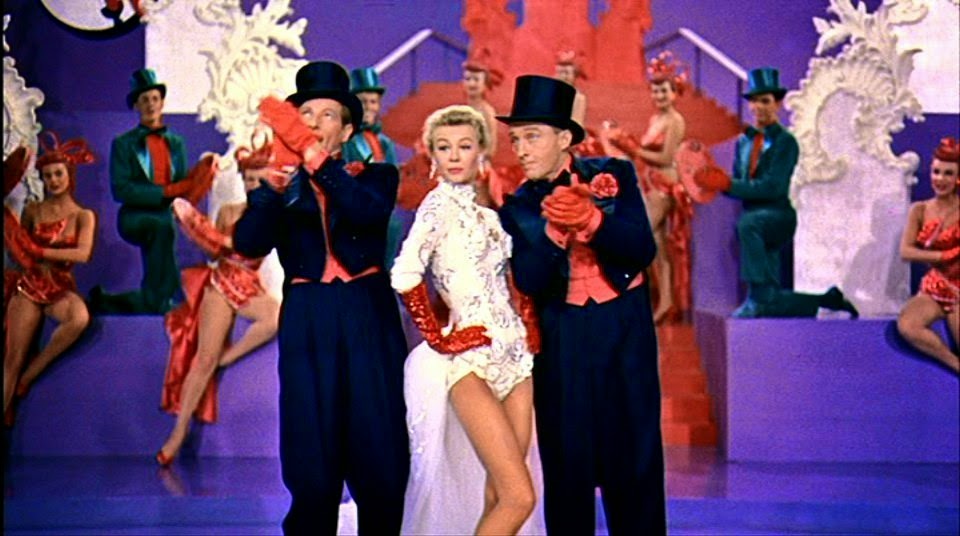
It's that time of the year to dust off the 1954 musical White Christmas and watch Bing and Danny Kaye dance upon your yuletide screen. Bing's leading lady in the film was Rosemary Clooney, but I wanted to see if I could find any pictures of Der Bingle with Danny Kaye's love interest in the film - Vera-Ellen. Here's what I found...


Monday, December 21, 2015

UNKNOWN FACTS ABOUT WHITE CHRISTMAS

Even though I much prefer the earlier holiday themed musical Holiday Inn (1942), the musical White Christmas is remembered much more. Here are some fun facts about the 1954 movie that you might not know about...


1. White Christmas was intended to reunite Crosby and Fred Astaire for their third Irving Berlin showcase musical. Crosby and Astaire had previously co-starred in Holiday Inn (1942) (of which ‘White Christmas’ was a partial remake) and Blue Skies (1946). Astaire declined the project after reading the script and Danny Kaye would eventually take the role. Vera-Ellen and Rosemary Clooney starred as the leading ladies.

2. Produced by Paramount Pictures, filming took place between Sep. and Nov. 1953. The movie premiered in October of 1954 and Paramount introduced a new mountain in their logo. That mountain would be in use for all Paramount films until the end of 1986.


3. The choreography was directed by an uncredited Bob Fosse. Fosse appears in three dance numbers including a riveting performance in the Abraham number.

4. Vera-Ellen’s singing was dubbed by Trudy Stevens. Clooney’s and Steven’s voices are what is heard in the film. However, when the time came to record the soundtrack album, Rosemary Clooney’s contract with Columbia Records made it impossible for her to participate. Thus, Peggy Lee stepped in. A soundtrack with Crosby, Kaye, Clooney, and Stevens was never made!

5.  The photo Vera-Ellen shows of her brother Benny is actually a photo of Carl Switzer, who played Alfalfa in The Little Rascals, in an army field jacket and helmet liner.


6. At 18 Vera-Ellen was one of the youngest Rockettes at Radio City Music Hall, although she was not tall. During the 1950s, she was reputed to have the “smallest waist in Hollywood” and is believed to have suffered from anorexia nervosa. Rumours of her high necked, long sleeved costumes being designed to hide her neck and arms still run rampant. She retired from the screen in 1957 and became more reclusive when her 3 month old daughter Victoria died of Sudden Infant Death Syndrome in 1963.

7. White Christmas was enormously popular with audiences, taking in $12,000,000 at the box office, making it the top moneymaker for 1954 by a wide margin. Count Your Blessings Instead of Sheep won White Christmas an Academy Award nomination for Best Original Song...


Monday, December 14, 2015

SPOTLIGHT ON VERA-ELLEN


Even to people that watch old movies, dancer Vera-Ellen is mostly known to the world as the younger sister of Rosemary Clooney in the movie WHITE CHRISTMAS(1954). However, she was a great dancer who had many demons that 1940s and 1950s audiences never knew.

She was born Vera Ellen Westmeier Rohe on February 16, 1921 in Norwood, Ohio , an enclave within Cincinnati, to Martin Rohe and Alma Catherine Westmeier, both descended from German immigrants. She began dancing at age 10 and quickly became very proficient. At 16 she was a winner on the Major Bowes Amateur Hour, and embarked upon a professional careerIn 1939, Vera-Ellen made her Broadway theatre debut in the Jerome Kern/Oscar Hammerstein musical Very Warm for May at the age of 18. She became one of the youngest Rockettes at Radio City Music Hall, although she was not tall. This led to roles on Broadway in Panama Hattie, By Jupiter, and A Connecticut Yankee, where she was spotted by Samuel Goldwyn, who cast her opposite Danny Kaye and Virginia Mayo in the film WONDER MAN(1945).


She danced with Gene Kelly in the Hollywood musicals WORDS AND MUSIC(1948) and ON THE TOWN(1949), while also appearing in the last Marx Brothers film, LOVE HAPPY(1950). She received top billing alongside Fred Astaire in Three Little Words and The Belle of New York (1952). Then came co-starring roles with Bing Crosby in the blockbuster hit WHITE CHRISTMAS(1954). The warm and fuzzy yuletide favorite WHITE CHRISTMAS (1954) is usuallly considered her best-remembered movie in which she played one-fourth of a glamorous quartet consisting of Bing Crosby, Danny Kaye and (sister) Rosemary Clooney.

Musicals went out of vogue by the late 50s and, as Vera-Ellen was practically synonymous with musicals, her career went into a sharp decline. During the 1950s, she was reputed to have the "smallest waist in Hollywood", and is believed to have suffered from anorexia nervosa. She retired from the screen in 1957. Guest appearances on the television variety shows of Dinah Shore and Perry Como in 1958 and 1959 were among the last of her entertainment career.

Vera-Ellen was married twice. Her first husband was fellow dancer Robert Hightower (from 1941 to 1946).Her second husband, from 1954 to 1966, was millionaire Victor Rothschild. Both marriages ended in divorce. While married to Rothschild, she gave birth to a daughter, Victoria Ellen Rothschild, who died at three months old of Sudden Infant Death Syndrome in 1963. Following the death of her child, Vera-Ellen withdrew from public life and never recovered from it. She died of cancer in Los Angeles, California in 1981...

For more on Vera-Ellen's later years go to this article:
VERA-ELLEN: THE LATER YEARS


Thursday, December 18, 2014

VERA-ELLEN AND WHITE CHRISTMAS

Along with Bing Crosby, Danny Kaye, and Rosemary Clooney - one of the most charming parts of the 1954 musical White Christmas was dancer Vera-Ellen. The movie was released 60 years ago, but since then rumors have persisted as to the health of Vera-Ellen during the making of the movie.


As you might notice, Vera-Ellen’s neck is covered in many pictures. In fact, her neck is covered up in the entirety of White Christmas. Vera-Ellen was an extremely thin woman who died in 1980 (at the age of 61). While never officially diagnosed during her lifetime (heck, the term itself was barely around during her lifetime), Vera-Ellen is alleged to have suffered from anorexia nervosa.
Anorexia nervosa is a mental illness pertaining to a distorted view of how skinny a person is that results in many different effects in people, most specifically, the physical problems of having their body waste away due to their belief that they are too fat.

Vera-Ellen was an EXTREMELY skinny woman for the rest of her life, and biographers of her have made it pretty clear that she suffered from the disease (it was perhaps exacerbated by studio weight requirements, something that afflicted Judy Garland, as well).

While it has not been proven, I do agree that the circumstantial evidence is probably there enough that I would tend to agree that she had SOME sort of eating disorder.


Bill Dennington, a friend of Vera-Ellen, had the following to say on the matter:
"Vera-Ellen was a friend for 20 years until her death. I was in L.A. and had lunch with her 2 weeks prior to her death. If you’ve read David Soren’s book Vera-Ellen: The Magic and The Mystery you would have seen my personal photographs of Vera-Ellen. The photographs were taken in the 60’s and 70’s and she looked fine. All of her life she wore something around her neck, a necklace,a choker, a scarf, a collar, etc., etc. It was her “trademark” like Van Johnson wore red socks. I saw her neck many times it was lovely…..like Audrey Hepburns. Hate that people think of her as “the dancer with anorexia” and not just the FABULOUS DANCER WHO HAS BEEN SO OVERLOOKED !!!!!!!!!!!!"
In any event, to the matter at hand – the story is that Vera-Ellen’s neck had to be covered up in White Christmas because the costumes were designed to cover her neck, which was aged beyond her years due to her eating disorder. If you search around, you’ll get that basic story in lots of places.

However, while I would agree that it seems to be too much of a coincidence that they happened to cover her neck in EVERY shot in White Christmas, I differ about the reason behind it. It may be none of our business what Vera-Ellen was suffering from, but regardless what is not disputed is that she was a wonderful and talented dancer...

Friday, February 22, 2013

WHITE CHRISTMAS DANCER DIES


He teamed with Vera-Ellen in the Bing Crosby classic "White Christmas", with Cyd Charisse in "Meet Me in Las Vegas" and with Tybee Arfa in nightclubs and on television.


John Brascia, the handsome male half of three spectacular Hollywood dance teams in the 1950s and '60s, died Tuesday at a nursing home in Santa Monica following a 20-year battle with Parkinson's disease, his daughter said. He was 80.

Tony Bennett, who served as Brascia's best man at his wedding to actress-model Sondra Scott on New Year's Eve in 1970, called his longtime friend days before he died, Brascia's daughter, Christina McNown, told The Hollywood Reporter. Brascia tap-danced with and twirled the slim-waisted Vera-Ellen in the high-octane "Abraham" number in Michael Curtiz's White Christmas (1954) and with the sultry Cyd Charisse in Meet Me in Las Vegas (1956) in another famed number, "Frankie and Johnny."

In the Las Vegas scene, set in a nightclub and accompanied by the singing of Sammy Davis Jr., Brascia, who was dancing with another woman (Liliane Montevecchi), dies at the hand of Charisse. "He was her mate/but he couldn’t fly straight," Davis sings during the number.

Later, Brascia teamed with Tybee Arfa in the act Brascia and Tybee, with the pair appearing as the opening nightclub act for such stars as Frank Sinatra, Lena Horne, Dean Martin and George Burns and as regulars on television on The Ed Sullivan Show, The Jack Benny Show and The Hollywood Palace.

Brascia had met Arfa at the Stage Deli in New York City in 1957, and they married soon afterward. (In an uncredited role, Arfa would play a dancer in the wedding scene in 1972's The Godfather.)

Brascia, whose fans included Elvis Presley, also worked as an actor in non-dancing roles in such films as The Ambushers (1967), The Wrecking Crew (1968), Executive Action (1973), Walking Tall (1973) and The Baltimore Bullet (1980), in the telefilm Pray for the Wildcats (1974) and in the TV series S.W.A.T. and Joe and Sons.

Brascia also wrote and produced The Baltimore Bullet, which was inspired by his passion for the game of pool. The film about hustlers starred James Coburn, Omar Sharif and Bruce Boxleitner.

Brascia was born May 11, 1932, in Fresno, Calif., to Italian parents Caterina and Gaetano. He grew up in Colton, Calif., and attended Hollywood High School.

He made his Broadway debut in February 1953 in Hazel Flagg, a musical from Jules Styne and Bob Hilliard that was based on the 1937 Carole Lombard screwball comedy Nothing Sacred. The production was choreographed by Robert Alton -- a major figure in dance choreography for Broadway and Hollywood musicals -- and Brascia received an Outer Critics Circle Award for his performance.

Alton was in charge of the musical numbers in White Christmas, starring Bing Crosby and Danny Kaye, and he cast Brascia as the lead dancer in that movie.

In addition to Christina, his daughter with Scott, Brascia is survived by another daughter, Giavonna (from his marriage in 1986 to actress-model Jordan Michaels), and grandchildren John, Mary-Catherine and Arabella.

Christina, the wife of former UCLA star quarterback Cade McNown, told THR that Brascia was sued for "alienation of affection" by famed Spanish-American bandleader Xavier Cugat for "stealing" his wife, actress-singer Abbe Lane. (Cugat and Lane divorced in the early 1960s.)

Monday, December 24, 2012

REWATCHING WHITE CHRISTMAS

Here is yet another great reflection on Bing's career. No one like Steve Fay can weave his words around in such an interesting and thought provoking manor...


Not having cable or satellite TV, I have gotten more and more used to movies becoming a rarity on American broadcast TV, and consequently I expect to see fewer older movies on the stations I get. With the holiday season, a few Christmas-related movies have been showing so far, but they are either ones from the last 10-15 years or they are cartoon features. It's not like the old days when two or three stations would repeat each of the major Christmas movies from the 1940s & 50s. To watch those, we have resort to our tapes and DVDs. So this past Saturday night became "White Christmas" night at our house.

There are probably not many films I have watched as many times as "White Christmas," so obviously all of the scenes and songs are intensely familiar, yet I still get choked up at the end when the stage backdrop rises to show the snow falling, and in those moments when Rosie's and Bing's characters fall back in love. The drama of the old general and his former troops' devotion to him still affects me, too. Then there are the seasonal songs, and not just the title song, but also "Snow" which still deserves more radio play than I ever think it got.


But there are also occasionally new or surprisingly-deepening impressions that come along in these later viewings. One particularly strong one is how great Danny Kaye's singing and dancing are in the song: "The Best Things Happen While You're Dancing." The effortlessly-looking high spins around those posts are quite amazing. Another thing that stood out for me Saturday was just how good Rosemary Clooney was, not just her great singing, but how convincing she was with all of the attitudes and emotional states her character travels through. And then how she is entirely lovely in the scene that included the "Count Your Blessings." What a shame that she and Bing didn't do another movie together.

Another impression came through to me more than in the past, too, and that was about Bing's own dancing ability. While he certainly could have been upstaged by co-stars like Astaire, O'Connor, or Kaye, Bing always seemed to hold his own in dance scenes with their lot. He might not look like he could be as light on his feet as they were, but he matched them step for step, unless he didn't for comic effect. While it rarely seems to get mentioned, Bing Crosby is quite a competent hoofer! I wonder what kind of effort went into keeping him on his toes so well.


A cultural issue also came to mind in my watching this time, about how different the impression of the US military was in post-WWII films like "White Christmas." Then the US had a 'civilian' army. The great majority signing up or drafted for that War, assuming they survived, were only there on temporary assignment from their lives at home. Some of their sloppiness or unruliness, joked about in this movie, comes from their not being career soldiers like General Waverly, who managed a great deal of tolerance toward them in leading them. But now, after decades of a 'professional' all-volunteer army, in which troops serve many enlistments, even several tours of duty in wars longer than WWII, I wonder whether today's soldiers are as able to identify with that image of WWII soldiers, even as much as Vietnam era soldiers were able to do?

In any case, "White Christmas" seems to offer more to appreciate and to ponder...


SOURCE

Saturday, November 20, 2010

SNOW - REMIX

With the holidays quickly approaching, I found this insteresting remix of the song "SNOW" from WHITE CHRISTMAS(1954). I know I may sound anti holiday, but I never liked the song "SNOW", but I like it better with hearing this interesting version. What do you think...

Wednesday, November 10, 2010

WHITE CHRISTMAS ON BLU-RAY

CHICAGO – Irving Berlin’s “White Christmas” with Bing Crosby and Danny Kaye was the #1 film of 1954 and has become an annual favorite for millions of families all the way back to the days before VHS. Paramount has released the musical charmer on Blu-ray with new special features along with a snowy 2-disc holiday DVD edition for those still waiting for Santa to bring them a Blu-ray player. Dream of a “White Christmas” in HD. First, a little history. The film “White Christmas” is not the origin of the song that gave it a title. It was reportedly sung before “Holiday Inn,” a 1942 film with Crosby, but that’s the film that made it popular (and, actually, a better flick than “White Christmas,” which is something of a remake of “Holiday Inn”).

With its longing for home, the song took off during World War II and won the Oscar for Best Original Song. It became immensely popular in the ’40s and the success of the song actually helped propel the success of the film in 1954, the biggest of that year by some margin. I have to start with a little blasphemy that could mean coal in my stocking — I’m a huge musical fan and love a lot of the road movies of Crosby and Bob Hope but “White Christmas” is just okay. Some of the music is great and the stars, especially a luminous Rosemary Clooney, are at the top of their game, but the story is pretty lackluster and Crosby and Kaye don’t have the same chemistry with each other or with their romantic leads as the best of this kind of material. While hearing and seeing Bing in HD sing the gorgeous title track is something musical fans should do, the overall film is not one of the best musicals of its period.

I love the song “White Christmas” but you can keep “Sisters” and “Count Your Blessings Instead of Sheep.” I recognize the cultural importance of “White Christmas” and, being a huge musical fan, can enjoy parts of it but I respect it more than actually like it. Having said that, the Blu-ray and DVD editions do a notable job for fans of the film. The HD 1080p picture is a bit over-polished at times, making Bing and Danny look more plastic than they should. What some people don’t realize about HD is that it’s a matter of balance. If you just turn up the colors and polish the grain, people start to look more unnatural than they did in the days of DVD and “White Christmas” has a few of those moments where it just doesn’t look right. And the audio has a few similarly frustrating issues. I suggest you switch over to the restored mono track, which sounds much clearer and more natural for the film. The special features on “White Christmas” are notable for a 55-year-old film and many on the Blu-ray disc are in HD.

The DVD edition comes in a larger-than-average box with fake snow in the front with lobby card reprints on the inside. Rosemary Clooney is the star of the special features on the Blu-ray disc and she’s a delight. The featurettes are all relatively-brief and focused on different elements of the production. Fans happy to open “White Christmas” on Blu-ray on the morning of December 25th will be happy to watch them later that afternoon. Special Features: o Commentary by Rosemary Clooney o Backstage Stories from White Christmas o Rosemary’s Old Kentucky Home o Bing Crosby: Christmas Crooner o Danny Kaye: Joy to the World o Irving Berlin’s White Christmas o White Christmas: From Page to Stage o White Christmas: A Look Back with Rosemary Clooney o 2 Theatrical Trailers “White Christmas” stars Bing Crosby, Danny Kaye, Rosemary Clooney, and Vera-Ellen. It was written by Norman Krasna, Norman Panama, and Melvin Frank and directed by Michael Curtiz. It was released on Blu-ray and DVD on November 2nd, 2010. It is not rated and runs 120 minutes...