This is a one stop place to find news and stories about the greatest singer of all-time, Bing Crosby. From his days with Paul Whiteman to his final performances in 1977, we will examine this remarkable entertainer's life and times!
Monday, January 25, 2016
A BING SONG: IT'S THE NATURAL THING TO DO
Bing chose a new arranger and orchestra leader for his radio programs and records in 1937 -- John Scott Trotter. The association would last 17 years and produce some of Bing's biggest hits. They recorded four songs on their very first trip to the recording studio -- July 12, 1937. Three of them charted, with "The Moon Got in My Eyes" reaching #18, "Smarty" reaching #1, and "It's the Natural Thing to Do" reaching #2...
IT'S THE NATURAL THING TO DO
(Burke, Johnston)
When a bird young and free
Hangs around a certain tree
Singing serenades that tell his love is true
That's because it's the natural thing to do.
And when a cat on a fence
Keeps his darling in suspense
And he's brave enough to face a well-aimed shoe
That's because it's the natural thing to do.
And you know every dove
Has its heart set on love,
Rabbits, too, pet and pat,
And there's nothin wrong with that!
When a boy such as I
Tries so hard to qualify
With a very lovely lady such as you.
Can't you see it's the natural thing to do?
And then the girl she acts demure
The boy he feels proud and sure
So proud and sure that he impulsively suggests a rendevous.
Fine thing!
That's because it's the natural thing to do.
But the girl she just won't agree.
She whimpers and she simpers
And he begs on bended knee.
But she runs away because she knows full well he'll pursue.
The chump!
That's because it's the natural thing to do.
Then the boy in despair
Waves his arms, tears his hair.
Stamps his feet and he acts like mad
Then you know that he's got it bad.
Then the girl she oughta fall
If she's got a heart at all.
She should take him in her arms
And kiss him too.
Oh! Oh! Just the natural thing to do.
Monday, January 18, 2016
WHATEVER HAPPENED TO BING CROSBY - PART 4
By the 50’s, a new generation of Americans was transferring its musical loyalties to a very different kind of singer. Frank Sinatra started out as a “high Bing Crosby,” but quickly developed into something more: singing with the big band of Tommy Dorsey, he brought to the ballads of the 40’s a vulnerability that teenagers found irresistible. Like Crosby, he weathered a vocal crisis from which he emerged with a lower, darker voice, but it made him more rather than less interesting. The Sinatra of the 50’s sang with a sharp edge of sexuality and aggression, while his youthful vulnerability deepened into a quality bordering at times on outright despair.
Sinatra’s emotional candor stands in stark contrast to the impenetrable reserve of Crosby, who once famously told the lyricist Johnny Burke not to write songs for him that contained the phrase, “I love you.” Unlike Sinatra, he was never a confessional artist, and the intensity he brought to his early recordings of ballads like “Stardust” was musical rather than dramatic. (To put it another way, he sang songs, not monologues.) Revealingly, he preferred the middle-of-the-road backing of John Scott Trotter’s studio orchestras to the harder-swinging, harmonically sophisticated arrangements that Nelson Riddle created for such classic Sinatra albums of the 50’s as Songs for Swingin’ Lovers and Only the Lonely.
The 50’s continue to be portrayed in the media as a decade of mindless conformity, but they were actually a time of considerable cultural volatility, nowhere more so than in popular music and jazz. While the comforting sound of Bing Crosby’s balladry remained reassuring to many Americans, others were looking for something more emotionally challenging, and Sinatra’s confessionalism, like the deceptively “cool” jazz of the trumpeter Miles Davis, suited their mood perfectly.
To the end of his life, Crosby continued to make records and appear on radio and TV, and he never lost his ability to swing. (“Bing had the beat, the absolute best time,” said the drummer Jake Hanna. “You just followed him and he carried you right along.”) But his way of making music had become unfashionable, and because the middle-aged Crosby was the only one whom younger listeners knew, they came to see him as a symbol of everything they held in contempt.
Fortunately, the other Bing Crosby—the greater Crosby—lives again in the first half of A Pocketful of Dreams, and on the best of the hundreds of records he made between 1927 and 1936. “As far as I am concerned,” Crosby said in 1960, “with the exception of a phonograph record or two, I don’t think I have done anything that’s really outstanding or great or marvelous or anything that deserves any superlatives.” In fact, he was a nonpareil jazz singer who has been unfairly written out of the history of the music he helped to shape, as well as a balladeer of magical sensitivity and irresistible vitality. In helping to restore him to life, and despite certain deficiencies in musical understanding, Gary Giddins has done an inestimable service to American music...
Sinatra’s emotional candor stands in stark contrast to the impenetrable reserve of Crosby, who once famously told the lyricist Johnny Burke not to write songs for him that contained the phrase, “I love you.” Unlike Sinatra, he was never a confessional artist, and the intensity he brought to his early recordings of ballads like “Stardust” was musical rather than dramatic. (To put it another way, he sang songs, not monologues.) Revealingly, he preferred the middle-of-the-road backing of John Scott Trotter’s studio orchestras to the harder-swinging, harmonically sophisticated arrangements that Nelson Riddle created for such classic Sinatra albums of the 50’s as Songs for Swingin’ Lovers and Only the Lonely.
The 50’s continue to be portrayed in the media as a decade of mindless conformity, but they were actually a time of considerable cultural volatility, nowhere more so than in popular music and jazz. While the comforting sound of Bing Crosby’s balladry remained reassuring to many Americans, others were looking for something more emotionally challenging, and Sinatra’s confessionalism, like the deceptively “cool” jazz of the trumpeter Miles Davis, suited their mood perfectly.
To the end of his life, Crosby continued to make records and appear on radio and TV, and he never lost his ability to swing. (“Bing had the beat, the absolute best time,” said the drummer Jake Hanna. “You just followed him and he carried you right along.”) But his way of making music had become unfashionable, and because the middle-aged Crosby was the only one whom younger listeners knew, they came to see him as a symbol of everything they held in contempt.
As Giddins puts it: He was known to [the postwar generation] as a faded and not especially compelling celebrity, a square old man who made orange-juice commercials and appeared with his much younger family on Christmas telecasts that the baby boomers never watched. . . . They would have been amazed to learn how advanced, savvy, and forceful a musician he had been in his prime.
Fortunately, the other Bing Crosby—the greater Crosby—lives again in the first half of A Pocketful of Dreams, and on the best of the hundreds of records he made between 1927 and 1936. “As far as I am concerned,” Crosby said in 1960, “with the exception of a phonograph record or two, I don’t think I have done anything that’s really outstanding or great or marvelous or anything that deserves any superlatives.” In fact, he was a nonpareil jazz singer who has been unfairly written out of the history of the music he helped to shape, as well as a balladeer of magical sensitivity and irresistible vitality. In helping to restore him to life, and despite certain deficiencies in musical understanding, Gary Giddins has done an inestimable service to American music...
a href="https://www.commentarymagazine.com/articles/whatever-happened-to-bing-crosby/">SOURCE
Monday, January 11, 2016
NEW CD: GOOD AND RARE VOLUME 3
I am happy that another volume in Sepia Records ongoing series of Bing Crosby issues will be happening. This release is particularly mouth watering for Bing fans! The title will be released on March 4, 2016...
Bing Crosby fans will be delighted with this 'Good & Rare Volume 3' CD containing a plethora of previously unissued recordings, alternate takes and rehearsal recordings. All good and all rare!
Starting with "Ol' Man River" from 1928, highlights include this unissued alternate take of Bing's first Victor hit with Paul Whiteman. From 1944 "Duke the Spook", "Song of the Seventh Airforce" and "Song of the Fifth Marines", are three previously unissued recordings Crosby made for the war effort, rehearsal recordings of Crosby's film songs include "It's Easy to Remember" from 1934 and "I've Got a Pocketful of Dreams" from 1938.
Here are details regarding the tracks...
PAUL WHITEMAN AND HIS ORCHESTRA
TRACK 1 – Ol’ Man River (Victor BVE-41607 take 3, recorded January 11, 1928) (Kern - Hammerstein II)
STUDIO ORCHESTRA
TRACK 2 – Poor Little G-String (recorded in 1929) (Ahlert – Turk)
PAUL WHITEMAN AND HIS ORCHESTRA
TRACK 3 – Song of the Dawn (Columbia W-149822, take 1, recorded March 21, 1930) (Ager – Yellen)
PIANO ACCOMPANIMENT
TRACK 4 – A Bench in the Park (radio, recorded in 1930) (Ager – Yellen))
PIANO ACCOMPANIMENT
TRACK 5 – Everything’s Agreed Upon (radio, recorded in 1930) (Barris – Crosby)
LENNIE HAYTON AND HIS ORCHESTRA
TRACK 6 – After Sundown (Brunswick LA-21, take B, recorded September 27, 1933) (Brown – Freed)
GEORGIE STOLL AND HIS ORCHESTRA
TRACK 7 – Let Me Call You Sweetheart (Decca DLA-8, take B, recorded August 8, 1934) (Whiston – Friedman)
VICTOR YOUNG AND HIS ORCHESTRA
TRACK 8 – Red Sails in the Sunset (Decca DLA-253, take B, recorded November 12, 1935) (Williams – Kennedy)
STUDIO ORCHESTRA
TRACK 9 – It’s Easy to Remember (film recording No. B-1976, recorded December 1934) (Rodgers – Hart)
RHYTHM ACCOMPANIMENT
TRACK 10 – The Moon Got in My Eyes (demo No. B-4852, probably recorded April, 1937) (Johnston – Burke)
TRACK 11 – All You Want to Do Is Dance (demo No. B-4853, probably recorded April, 1937) (Johnston – Burke)
TRACK 12 – Laugh and Call It Love (demo No. B-6559, probably recorded April, 1938) (Monaco – Burke)
TRACK 13 – Laugh and Call It Love (demo No. B-6560, probably recorded April, 1938) (Monaco – Burke)
TRACK 14 – Where Is Central Park? (demo No. B-6561, probably recorded April, 1938) (Monaco – Burke)
TRACK 15 – Beware (I’m Beginning to Care) (demo No. B-7318, probably recorded January, 1939) (Monaco – Burke)
TRACK 16 – East Side of Heaven (demo No. B-7319, probably recorded January, 1939) (Monaco – Burke)
TRACK 17 – Sing a Song of Sunbeams (demo No. B- 7320, probably recorded January, 1939) (Monaco – Burke)
TRACK 18 – When the Moon Comes over Madison Square (demo No.B-7691, probably recorded May, 1940) (Monaco – Burke)
PIANO ACCOMPANIMENT
TRACK 19 – Duke the Spook (Decca L-3174, recorded July 2, 1943) (Van Heusen – Burke)
JOHN SCOTT TROTTER & HIS ORCHESTRA, WITH THE MUSIC MAIDS & HAL
TRACK 20 – Song of the Seventh Air Force (Decca TL-151, recorded October 21, 1943) (Van Heusen – Burke)
PIANO ACCOMPANIMENT
TRACK 21 – Song of the Fifth Marines (Decca TL-152, probably recorded July 1944) (Van Heusen – Burke)
JOHN SCOTT TROTTER & HIS ORCHESTRA
TRACK 22 – Night and Day (Decca L-3316 fluff, February 11, 1944) (Porter)
BUDDY BREGMAN & HIS ORCHESTRA
TRACK 23 – The Blue Room (Verve, BR20155, alternate, June 11, 1956) (Rodgers – Hart)
TRACK 24 – Cheek to Cheek (Verve, BR20164, alternate, June 12, 1956) (Berlin)
TRACK 25 – Mountain Greenery (Verve, BR20166, alternate, June 12, 1956) (Rodgers – Hart)
SOURCE
Bing Crosby fans will be delighted with this 'Good & Rare Volume 3' CD containing a plethora of previously unissued recordings, alternate takes and rehearsal recordings. All good and all rare!
Starting with "Ol' Man River" from 1928, highlights include this unissued alternate take of Bing's first Victor hit with Paul Whiteman. From 1944 "Duke the Spook", "Song of the Seventh Airforce" and "Song of the Fifth Marines", are three previously unissued recordings Crosby made for the war effort, rehearsal recordings of Crosby's film songs include "It's Easy to Remember" from 1934 and "I've Got a Pocketful of Dreams" from 1938.
Here are details regarding the tracks...
PAUL WHITEMAN AND HIS ORCHESTRA
TRACK 1 – Ol’ Man River (Victor BVE-41607 take 3, recorded January 11, 1928) (Kern - Hammerstein II)
STUDIO ORCHESTRA
TRACK 2 – Poor Little G-String (recorded in 1929) (Ahlert – Turk)
PAUL WHITEMAN AND HIS ORCHESTRA
TRACK 3 – Song of the Dawn (Columbia W-149822, take 1, recorded March 21, 1930) (Ager – Yellen)
PIANO ACCOMPANIMENT
TRACK 4 – A Bench in the Park (radio, recorded in 1930) (Ager – Yellen))
PIANO ACCOMPANIMENT
TRACK 5 – Everything’s Agreed Upon (radio, recorded in 1930) (Barris – Crosby)
LENNIE HAYTON AND HIS ORCHESTRA
TRACK 6 – After Sundown (Brunswick LA-21, take B, recorded September 27, 1933) (Brown – Freed)
GEORGIE STOLL AND HIS ORCHESTRA
TRACK 7 – Let Me Call You Sweetheart (Decca DLA-8, take B, recorded August 8, 1934) (Whiston – Friedman)
VICTOR YOUNG AND HIS ORCHESTRA
TRACK 8 – Red Sails in the Sunset (Decca DLA-253, take B, recorded November 12, 1935) (Williams – Kennedy)
STUDIO ORCHESTRA
TRACK 9 – It’s Easy to Remember (film recording No. B-1976, recorded December 1934) (Rodgers – Hart)
RHYTHM ACCOMPANIMENT
TRACK 10 – The Moon Got in My Eyes (demo No. B-4852, probably recorded April, 1937) (Johnston – Burke)
TRACK 11 – All You Want to Do Is Dance (demo No. B-4853, probably recorded April, 1937) (Johnston – Burke)
TRACK 12 – Laugh and Call It Love (demo No. B-6559, probably recorded April, 1938) (Monaco – Burke)
TRACK 13 – Laugh and Call It Love (demo No. B-6560, probably recorded April, 1938) (Monaco – Burke)
TRACK 14 – Where Is Central Park? (demo No. B-6561, probably recorded April, 1938) (Monaco – Burke)
TRACK 15 – Beware (I’m Beginning to Care) (demo No. B-7318, probably recorded January, 1939) (Monaco – Burke)
TRACK 16 – East Side of Heaven (demo No. B-7319, probably recorded January, 1939) (Monaco – Burke)
TRACK 17 – Sing a Song of Sunbeams (demo No. B- 7320, probably recorded January, 1939) (Monaco – Burke)
TRACK 18 – When the Moon Comes over Madison Square (demo No.B-7691, probably recorded May, 1940) (Monaco – Burke)
PIANO ACCOMPANIMENT
TRACK 19 – Duke the Spook (Decca L-3174, recorded July 2, 1943) (Van Heusen – Burke)
JOHN SCOTT TROTTER & HIS ORCHESTRA, WITH THE MUSIC MAIDS & HAL
TRACK 20 – Song of the Seventh Air Force (Decca TL-151, recorded October 21, 1943) (Van Heusen – Burke)
PIANO ACCOMPANIMENT
TRACK 21 – Song of the Fifth Marines (Decca TL-152, probably recorded July 1944) (Van Heusen – Burke)
JOHN SCOTT TROTTER & HIS ORCHESTRA
TRACK 22 – Night and Day (Decca L-3316 fluff, February 11, 1944) (Porter)
BUDDY BREGMAN & HIS ORCHESTRA
TRACK 23 – The Blue Room (Verve, BR20155, alternate, June 11, 1956) (Rodgers – Hart)
TRACK 24 – Cheek to Cheek (Verve, BR20164, alternate, June 12, 1956) (Berlin)
TRACK 25 – Mountain Greenery (Verve, BR20166, alternate, June 12, 1956) (Rodgers – Hart)
SOURCE
WHATEVER HAPPENED TO BING CROSBY - PART 3
As Bing Crosby lost his high notes and settled into a less demanding bass-baritone range, he also changed his style. Not only did he abandon the jazzy scat singing of his young years, he seemed almost to lose interest in jazz itself. Though he was always capable of unlimbering for such frisky novelties as Johnny Mercer’s “I’m an Old Cowhand” (1936) and “Bob White (Whatcha Gonna Swing Tonight?)” (1937, with Connie Boswell), he now concentrated on ballads, which he sang with a quiet warmth well suited to his deeper range.By this time, Crosby was recording for Decca, a new label whose chief producer, Jack Kapp, had encouraged him to explore a repertoire better suited to the tastes of “the masses.” Kapp assured Crosby that by shunning “ ‘hot’ songs” and concentrating instead on a wide-ranging mixture of contemporary ballads, prewar standards (like “I Love You Truly” and “Let Me Call You Sweetheart”), collaborations with other popular Decca artists like the Andrews Sisters, and ethnic novelties ranging from country to Hawaiian music, he could attain a degree of popularity “as great as ever enjoyed by any singer in this country. You have in your grasp,” Kapp added, invoking the name of the astonishingly successful Irish tenor, “the opportunity to be the John McCormack of this generation.”
Bing Crosby unhesitatingly took Jack Kapp’s advice, and the results were just as predicted. By the 40’s, he was more than a pop singer, more than a movie star. Instead, he became, as Giddins rightly says, a member of the family: “No other pop icon has ever been so thoroughly, lovingly liked—liked and trusted. . . . His was the voice of the nation, the cannily informal personification of hometown decency—friendly, unassuming, melodious, irrefutably American.”
But Crosby paid a high price for allowing Jack Kapp to turn him into the musical equivalent of a Norman Rockwell Saturday Evening Post cover. Jazz is not an absolute value, and the fact that Crosby’s new style was less explicitly “jazzy” did not necessarily make it less good. (Nat “King” Cole, for example, became a better singer when he gave up jazz piano to concentrate on ballads.) The problem with the new Crosby was that his singing had become less vital, less compelling, lessinteresting. It was as though the loss of his high notes had also robbed him of his sense of musical adventure, his ability to surprise and delight the ear. The decline was not inexorable, and he would continue to make occasional memorable recordings well into the 1940’s. For the most part, though, he was now singing—figuratively as well as literally—in a lower key.
Gary Giddins has mixed feelings about Crosby’s change of style. “What his singing forfeited in muscularity,” Giddins argues, “it gained in poignancy. . . . Bing in the mid-30’s was the most quietly assured male pop singer alive.” Yet he also admits that there was more to it than that:
[I]n singling out McCormack as a career template and encouraging Bing to deflect hot songs, [Kapp] hoped to remake him as a smoother, less mannered, ultimately less expressive singer, a kind of musical comfort food. . . . [Crosby] was now on the verge of reinventing common-denominator aesthetics, creating a national popular music that pleased everyone. The cost, in the opinion of many observers, was encroaching blandness.
The strengths and weaknesses of the new Crosby can be heard in the great ballads he recorded during World War II “What’s New?” (Johnny Burke and Bob Haggart, 1939), “Skylark” (Johnny Mercer and Hoagy Carmichael, 1942), “It Could Happen to You” (Burke and Jimmy Van Heusen, 1943), “Long Ago and Far Away” (Ira Gershwin and Jerome Kern, 1944), and “Out of This World” (Cole Porter, 1944) rank high among the outstanding love songs of the decade, and Crosby sang them all with taste and sensitivity. But his interpretations seem almost detached, lacking the energy and ardor one might reasonably expect from a comparatively young man. To hear them is to be put in mind of Father O’Malley, the amiable priest Crosby played in the 1944 movie Going My Way. Like the good father himself, Bing Crosby in the 40’s sounded pleasant, engaging, humorous—and celibate...
SOURCE
Monday, January 4, 2016
WHATEVER HAPPENED TO BING CROSBY - PART 2
Musically, Crosby combined Armstrong’s infallible swing with Beider-becke’s lyricism. Such early 78 sides as “I’m Coming, Virginia” (1927), “Ol’ Man River” (1928), and “Make Believe” (1928) show him to have been astonishingly light on his rhythmic feet, more so than any singer of the period besides Armstrong. He reworked melodies with the self-assurance of a master improviser, adding ornaments and altering rhythms as his fancy dictated, and his “scat” singing (the made-up nonsense syllables popularized by Armstrong), heard to especially good advantage on the electrifying version of “St. Louis Blues” he recorded with Duke Ellington’s band in 1932, was wonderfully bold.
The young Bing Crosby was, in short, a jazz singer, arguably the first one after Louis Armstrong, and without question one of the best who ever lived. He was also, as Giddins correctly points out, “the first great ballad singer in jazz. . . . His sound had little precedent: rich, strong, masculine, and clean.”
By 1931, Crosby had left the Whiteman band and the Rhythm Boys, the vocal trio with which he had been featured during his years with Whiteman, and embarked on a solo career. In that year he began to appear in short subjects directed by Mack Sennett, the king of movie slapstick, thereby revealing himself to be a natural comedian, and was hired by CBS to star in his own radio show, Fifteen Minutes with Bing Crosby.
Crosby’s movies and radio appearances advertised his recordings, which began to sell in vast quantities, and within two years he was so successful that he was able to stop performing in public altogether. Between 1933 and 1975, the only crowds he sang for were the studio audiences invited to watch his radio shows. Dozens of other pop singers based their styles on his, among them Russ Columbo, Perry Como, Bob Eberle, Billy Eckstine, Dick Haymes, and Dean Martin. “All the singers tried to be Crosbys,” one of them wryly admitted. “You were either a high Crosby or a low Crosby.” At the age of thirty, Bing Crosby had become (in Duke Ellington’s words) “the biggest thing, ever.”
But the ultimate basis for Crosby’s superstardom—his voice—was proving to be perilously fragile. He had long had problems with laryngitis (an attack of which forced him to postpone his highly publicized network radio debut for two days), and many of the records he was making in the late 20’s and early 30’s reveal a hoarseness in the upper register which, though part of his appeal, was also an unmistakable sign of strain.
Late in 1931, a doctor warned Crosby that he had developed a node (a hard blister) on one of his vocal cords, thus rendering him particularly susceptible to laryngitis. Surgery was impossible: it might alter the quality of his voice unpredictably and permanently. The only treatment was complete vocal rest, but, Crosby having just reached the peak of his early stardom, that, too, was out of the question. He kept on singing—and drinking to excess, thereby doing further damage.
According to Giddins, Crosby’s difficulties cured themselves over time. But to listeners familiar with the long-term consequences of faulty vocal technique, his records tell a different story. Though his natural tessitura was that of a low baritone, he had an upper extension that he used freely in the late 20’s and early 30’s, casually tossing off high E’s and F’s. But because he had no formal training, he never learned how to negotiate safely the “break” leading to his upper register, and a combination of overwork, drink, and flawed technique gradually weakened that part of his voice.
Crosby’s 1931 recording of Hoagy Carmichael’s “Stardust” provides a dramatic illustration of the risks he was taking. It is one of his most famous recordings, and deservedly so: his youthful ballad style, vibrant and robust, is heard here in all its golden glory. But he is also audibly hoarse, and he sings the repeated high E’s of the chorus in a wide-open, “uncovered” voice that any competent teacher would immediately have spotted as a recipe for disaster.
Predictably, Crosby had another vocal crisis in 1932, and was told to “rest and don’t even answer the phone—don’t talk, don’t do anything.” Instead, he took a ten-day break, then resumed his busy schedule. Giddins mentions this episode in passing, apparently not realizing that it marked a turning point in the singer’s career, the moment when he began irreversibly to “lose his top.” Though he continued to sing full-voiced high F’s on record as late as 1935, they became fewer and farther between, and songs that he might once have performed in the key of F, such as “June in January” and “With Every Breath I Take” (both 1934), were transposed down a full step, to E flat. Nor was the change limited to his upper register: by 1935, his voice had grown darker in timbre and heavier in texture from top to bottom...
The young Bing Crosby was, in short, a jazz singer, arguably the first one after Louis Armstrong, and without question one of the best who ever lived. He was also, as Giddins correctly points out, “the first great ballad singer in jazz. . . . His sound had little precedent: rich, strong, masculine, and clean.”
By 1931, Crosby had left the Whiteman band and the Rhythm Boys, the vocal trio with which he had been featured during his years with Whiteman, and embarked on a solo career. In that year he began to appear in short subjects directed by Mack Sennett, the king of movie slapstick, thereby revealing himself to be a natural comedian, and was hired by CBS to star in his own radio show, Fifteen Minutes with Bing Crosby.
Crosby’s movies and radio appearances advertised his recordings, which began to sell in vast quantities, and within two years he was so successful that he was able to stop performing in public altogether. Between 1933 and 1975, the only crowds he sang for were the studio audiences invited to watch his radio shows. Dozens of other pop singers based their styles on his, among them Russ Columbo, Perry Como, Bob Eberle, Billy Eckstine, Dick Haymes, and Dean Martin. “All the singers tried to be Crosbys,” one of them wryly admitted. “You were either a high Crosby or a low Crosby.” At the age of thirty, Bing Crosby had become (in Duke Ellington’s words) “the biggest thing, ever.”
But the ultimate basis for Crosby’s superstardom—his voice—was proving to be perilously fragile. He had long had problems with laryngitis (an attack of which forced him to postpone his highly publicized network radio debut for two days), and many of the records he was making in the late 20’s and early 30’s reveal a hoarseness in the upper register which, though part of his appeal, was also an unmistakable sign of strain.
Late in 1931, a doctor warned Crosby that he had developed a node (a hard blister) on one of his vocal cords, thus rendering him particularly susceptible to laryngitis. Surgery was impossible: it might alter the quality of his voice unpredictably and permanently. The only treatment was complete vocal rest, but, Crosby having just reached the peak of his early stardom, that, too, was out of the question. He kept on singing—and drinking to excess, thereby doing further damage.
According to Giddins, Crosby’s difficulties cured themselves over time. But to listeners familiar with the long-term consequences of faulty vocal technique, his records tell a different story. Though his natural tessitura was that of a low baritone, he had an upper extension that he used freely in the late 20’s and early 30’s, casually tossing off high E’s and F’s. But because he had no formal training, he never learned how to negotiate safely the “break” leading to his upper register, and a combination of overwork, drink, and flawed technique gradually weakened that part of his voice.
Crosby’s 1931 recording of Hoagy Carmichael’s “Stardust” provides a dramatic illustration of the risks he was taking. It is one of his most famous recordings, and deservedly so: his youthful ballad style, vibrant and robust, is heard here in all its golden glory. But he is also audibly hoarse, and he sings the repeated high E’s of the chorus in a wide-open, “uncovered” voice that any competent teacher would immediately have spotted as a recipe for disaster.
Predictably, Crosby had another vocal crisis in 1932, and was told to “rest and don’t even answer the phone—don’t talk, don’t do anything.” Instead, he took a ten-day break, then resumed his busy schedule. Giddins mentions this episode in passing, apparently not realizing that it marked a turning point in the singer’s career, the moment when he began irreversibly to “lose his top.” Though he continued to sing full-voiced high F’s on record as late as 1935, they became fewer and farther between, and songs that he might once have performed in the key of F, such as “June in January” and “With Every Breath I Take” (both 1934), were transposed down a full step, to E flat. Nor was the change limited to his upper register: by 1935, his voice had grown darker in timbre and heavier in texture from top to bottom...
Monday, December 28, 2015
WHATEVER HAPPENED TO BING CROSBY - PART 1
It is understandable--if also unfortunate--that a man who once dominated American popular culture has largely faded from view.
For virtually any American over the age of sixty, Bing Crosby’s name is likely to evoke a wide range of memories. Though he was by far the best-known popular singer of the pre-rock era, Crosby was also a full-fledged movie star who won a best-actor Oscar for Going My Way (1944) and easily held his own opposite the likes of Fred Astaire and Bob Hope in such lighter fare as Holiday Inn (1942) andThe Road to Morocco (1942). His radio shows were no less successful, and with the arrival of TV in the 50’s, his face became as familiar a fixture in American homes as was his easygoing bass-baritone voice.
Bing Crosby: A Pocketful of Dreams, the first installment of a two-volume biography by the jazz critic Gary Giddins, It contains a list of statistics conveying something of the extent to which Crosby once dominated American popular culture. According to Giddins:
He made more recordings than any other singer, of which 38 were number-one hits, more than any other popular artist. (The Beatles, by contrast, topped the charts only 24 times.)
By 1980, he had sold a total of 400 million discs.
He was one of Hollywood’s top ten box-office attractions in America in fifteen different years between 1934 and 1954.
His best-known radio program, NBC’s Kraft Music Hall, reached an audience of as many as 50 million listeners—at the time, well over a third of the entire U.S. population.
But Crosby’s fame did not long survive his death in 1977. Indeed, it is now difficult to find anyone under the age of forty who knows anything specific about him other than that he recorded Irving Berlin’s “White Christmas.” By and large his work is available only on hard-to-find CD’s released by independent European labels, while most of his films are long forgotten.
Though several other artists of his generation—Louis Armstrong, Duke Ellington, and Benny Goodman among them—continue to be widely recognized as key figures in American music, Crosby tends increasingly to be overlooked by critics and journalists. He was, for instance, omitted entirely from Ken Burns’s ten-part PBS series Jazz, and is mentioned only in passing in Geoffrey C. Ward’s companion volume to the series.
How could so bright a star have dimmed so fast? Was there less to Bing Crosby than met the ear? Gary Giddins thinks not, and in A Pocketful of Dreams he makes the case for Crosby in unprecedentedly rich and rewarding detail. Though certain chapters could have been trimmed to useful effect (many readers will feel, for example, that far too much space is devoted to Crosby’s less important films), the book as a whole is both finely written and thoroughly engrossing. Still, in telling the story of how Crosby became “a phenomenon in the cultural life of the United States,” A Pocketful of Dreams occasionally dwells on the phenomenon at the expense of the artist.
Giddins is not himself a musician, trained or otherwise; for all his evident appreciation of Crosby’s singing, he lacks the technical knowledge needed to explain fully what he is hearing. And though his discussion of the posthumous decline in Crosby’s reputation is plausible as far as it goes, he is similarly unable to supply a completely adequate musical explanation for why “the most influential and successful popular performer in the first half of the 20th century” should have faded into semi-obscurity a mere quarter-century after his death...
For virtually any American over the age of sixty, Bing Crosby’s name is likely to evoke a wide range of memories. Though he was by far the best-known popular singer of the pre-rock era, Crosby was also a full-fledged movie star who won a best-actor Oscar for Going My Way (1944) and easily held his own opposite the likes of Fred Astaire and Bob Hope in such lighter fare as Holiday Inn (1942) andThe Road to Morocco (1942). His radio shows were no less successful, and with the arrival of TV in the 50’s, his face became as familiar a fixture in American homes as was his easygoing bass-baritone voice.
Bing Crosby: A Pocketful of Dreams, the first installment of a two-volume biography by the jazz critic Gary Giddins, It contains a list of statistics conveying something of the extent to which Crosby once dominated American popular culture. According to Giddins:
He made more recordings than any other singer, of which 38 were number-one hits, more than any other popular artist. (The Beatles, by contrast, topped the charts only 24 times.)
By 1980, he had sold a total of 400 million discs.
He was one of Hollywood’s top ten box-office attractions in America in fifteen different years between 1934 and 1954.
His best-known radio program, NBC’s Kraft Music Hall, reached an audience of as many as 50 million listeners—at the time, well over a third of the entire U.S. population.
But Crosby’s fame did not long survive his death in 1977. Indeed, it is now difficult to find anyone under the age of forty who knows anything specific about him other than that he recorded Irving Berlin’s “White Christmas.” By and large his work is available only on hard-to-find CD’s released by independent European labels, while most of his films are long forgotten.
Though several other artists of his generation—Louis Armstrong, Duke Ellington, and Benny Goodman among them—continue to be widely recognized as key figures in American music, Crosby tends increasingly to be overlooked by critics and journalists. He was, for instance, omitted entirely from Ken Burns’s ten-part PBS series Jazz, and is mentioned only in passing in Geoffrey C. Ward’s companion volume to the series.
How could so bright a star have dimmed so fast? Was there less to Bing Crosby than met the ear? Gary Giddins thinks not, and in A Pocketful of Dreams he makes the case for Crosby in unprecedentedly rich and rewarding detail. Though certain chapters could have been trimmed to useful effect (many readers will feel, for example, that far too much space is devoted to Crosby’s less important films), the book as a whole is both finely written and thoroughly engrossing. Still, in telling the story of how Crosby became “a phenomenon in the cultural life of the United States,” A Pocketful of Dreams occasionally dwells on the phenomenon at the expense of the artist.
Giddins is not himself a musician, trained or otherwise; for all his evident appreciation of Crosby’s singing, he lacks the technical knowledge needed to explain fully what he is hearing. And though his discussion of the posthumous decline in Crosby’s reputation is plausible as far as it goes, he is similarly unable to supply a completely adequate musical explanation for why “the most influential and successful popular performer in the first half of the 20th century” should have faded into semi-obscurity a mere quarter-century after his death...
Monday, December 21, 2015
UNKNOWN FACTS ABOUT WHITE CHRISTMAS
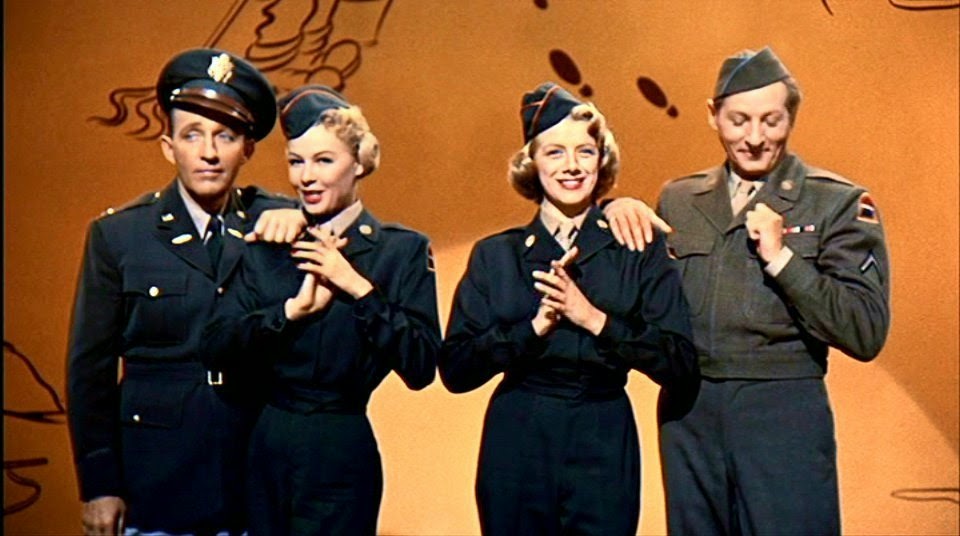
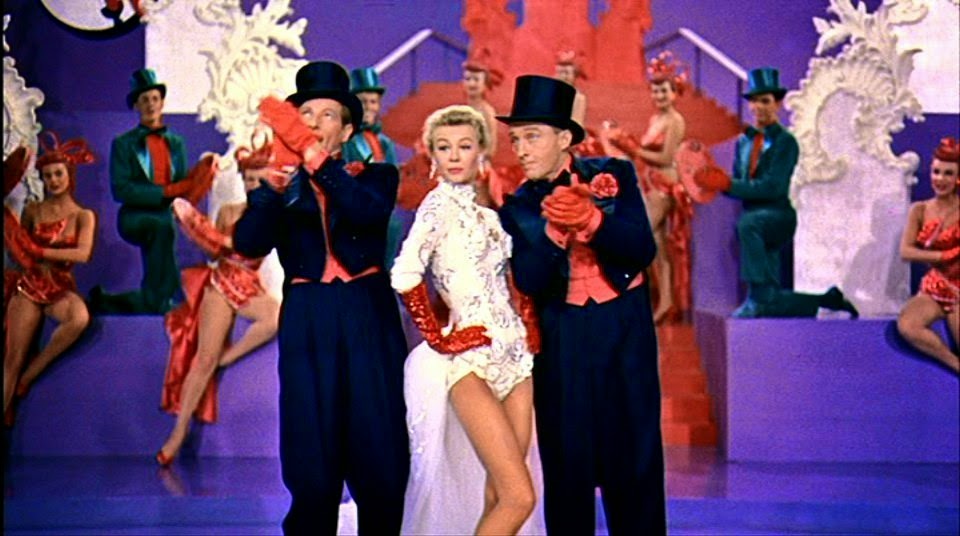
Even though I much prefer the earlier holiday themed musical Holiday Inn (1942), the musical White Christmas is remembered much more. Here are some fun facts about the 1954 movie that you might not know about...
2. Produced by Paramount Pictures, filming took place between Sep. and Nov. 1953. The movie premiered in October of 1954 and Paramount introduced a new mountain in their logo. That mountain would be in use for all Paramount films until the end of 1986.
3. The choreography was directed by an uncredited Bob Fosse. Fosse appears in three dance numbers including a riveting performance in the Abraham number.
4. Vera-Ellen’s singing was dubbed by Trudy Stevens. Clooney’s and Steven’s voices are what is heard in the film. However, when the time came to record the soundtrack album, Rosemary Clooney’s contract with Columbia Records made it impossible for her to participate. Thus, Peggy Lee stepped in. A soundtrack with Crosby, Kaye, Clooney, and Stevens was never made!
5. The photo Vera-Ellen shows of her brother Benny is actually a photo of Carl Switzer, who played Alfalfa in The Little Rascals, in an army field jacket and helmet liner.
6. At 18 Vera-Ellen was one of the youngest Rockettes at Radio City Music Hall, although she was not tall. During the 1950s, she was reputed to have the “smallest waist in Hollywood” and is believed to have suffered from anorexia nervosa. Rumours of her high necked, long sleeved costumes being designed to hide her neck and arms still run rampant. She retired from the screen in 1957 and became more reclusive when her 3 month old daughter Victoria died of Sudden Infant Death Syndrome in 1963.
7. White Christmas was enormously popular with audiences, taking in $12,000,000 at the box office, making it the top moneymaker for 1954 by a wide margin. Count Your Blessings Instead of Sheep won White Christmas an Academy Award nomination for Best Original Song...
1. White Christmas was intended to reunite Crosby and Fred Astaire for their third Irving Berlin showcase musical. Crosby and Astaire had previously co-starred in Holiday Inn (1942) (of which ‘White Christmas’ was a partial remake) and Blue Skies (1946). Astaire declined the project after reading the script and Danny Kaye would eventually take the role. Vera-Ellen and Rosemary Clooney starred as the leading ladies.
2. Produced by Paramount Pictures, filming took place between Sep. and Nov. 1953. The movie premiered in October of 1954 and Paramount introduced a new mountain in their logo. That mountain would be in use for all Paramount films until the end of 1986.
3. The choreography was directed by an uncredited Bob Fosse. Fosse appears in three dance numbers including a riveting performance in the Abraham number.
4. Vera-Ellen’s singing was dubbed by Trudy Stevens. Clooney’s and Steven’s voices are what is heard in the film. However, when the time came to record the soundtrack album, Rosemary Clooney’s contract with Columbia Records made it impossible for her to participate. Thus, Peggy Lee stepped in. A soundtrack with Crosby, Kaye, Clooney, and Stevens was never made!
5. The photo Vera-Ellen shows of her brother Benny is actually a photo of Carl Switzer, who played Alfalfa in The Little Rascals, in an army field jacket and helmet liner.
6. At 18 Vera-Ellen was one of the youngest Rockettes at Radio City Music Hall, although she was not tall. During the 1950s, she was reputed to have the “smallest waist in Hollywood” and is believed to have suffered from anorexia nervosa. Rumours of her high necked, long sleeved costumes being designed to hide her neck and arms still run rampant. She retired from the screen in 1957 and became more reclusive when her 3 month old daughter Victoria died of Sudden Infant Death Syndrome in 1963.
7. White Christmas was enormously popular with audiences, taking in $12,000,000 at the box office, making it the top moneymaker for 1954 by a wide margin. Count Your Blessings Instead of Sheep won White Christmas an Academy Award nomination for Best Original Song...
Labels:
Danny Kaye,
Rosemary Clooney,
Vera-Ellen,
White Christmas
Monday, December 14, 2015
SPOTLIGHT ON VERA-ELLEN
She was born Vera Ellen Westmeier Rohe on February 16, 1921 in Norwood, Ohio , an enclave within Cincinnati, to Martin Rohe and Alma Catherine Westmeier, both descended from German immigrants. She began dancing at age 10 and quickly became very proficient. At 16 she was a winner on the Major Bowes Amateur Hour, and embarked upon a professional careerIn 1939, Vera-Ellen made her Broadway theatre debut in the Jerome Kern/Oscar Hammerstein musical Very Warm for May at the age of 18. She became one of the youngest Rockettes at Radio City Music Hall, although she was not tall. This led to roles on Broadway in Panama Hattie, By Jupiter, and A Connecticut Yankee, where she was spotted by Samuel Goldwyn, who cast her opposite Danny Kaye and Virginia Mayo in the film WONDER MAN(1945).
She danced with Gene Kelly in the Hollywood musicals WORDS AND MUSIC(1948) and ON THE TOWN(1949), while also appearing in the last Marx Brothers film, LOVE HAPPY(1950). She received top billing alongside Fred Astaire in Three Little Words and The Belle of New York (1952). Then came co-starring roles with Bing Crosby in the blockbuster hit WHITE CHRISTMAS(1954). The warm and fuzzy yuletide favorite WHITE CHRISTMAS (1954) is usuallly considered her best-remembered movie in which she played one-fourth of a glamorous quartet consisting of Bing Crosby, Danny Kaye and (sister) Rosemary Clooney.
Musicals went out of vogue by the late 50s and, as Vera-Ellen was practically synonymous with musicals, her career went into a sharp decline. During the 1950s, she was reputed to have the "smallest waist in Hollywood", and is believed to have suffered from anorexia nervosa. She retired from the screen in 1957. Guest appearances on the television variety shows of Dinah Shore and Perry Como in 1958 and 1959 were among the last of her entertainment career.
Vera-Ellen was married twice. Her first husband was fellow dancer Robert Hightower (from 1941 to 1946).Her second husband, from 1954 to 1966, was millionaire Victor Rothschild. Both marriages ended in divorce. While married to Rothschild, she gave birth to a daughter, Victoria Ellen Rothschild, who died at three months old of Sudden Infant Death Syndrome in 1963. Following the death of her child, Vera-Ellen withdrew from public life and never recovered from it. She died of cancer in Los Angeles, California in 1981...
For more on Vera-Ellen's later years go to this article:
VERA-ELLEN: THE LATER YEARS
Labels:
Danny Kaye,
spotlight,
Vera-Ellen,
White Christmas
Monday, December 7, 2015
PHOTOS OF THE DAY: BING AND UNUSUAL PAIRINGS
Bing Crosby worked with everyone, and I mean EVERYONE in the business in his fifty years of entertaining. However, there are some people Bing did not really work with in the business much, and these pictures show some interesting pictures Bing took with other stars...
![]() |
| Bing with Dean Martin and Groucho Marx |
![]() |
| Bing with Dinah Shore |
![]() |
| Bing with Oliver Hardy |
![]() |
| Bing with Marlene Dietrich |
![]() |
| Bing with Gary Cooper |
![]() |
| Bing with Cary Grant |
Thursday, December 3, 2015
COMING SOON: WHATEVER HAPPENED TO BING CROSBY
Join us as we ring in the New Year with a four part series called "Whatever Happened To Bing Crosby". The series will examine Bing's impact on the entertainment industry and take a look at why he is not remember today as he should be...
DON'T MISS IT - STARTING DECEMBER 28TH!
Subscribe to:
Posts (Atom)