Showing posts with label Bruce Kogan. Show all posts

Sunday, June 29, 2025

GUEST REVIEWER: THE STAR MAKER

 Here is another review from the Bing Crosby guru Bruce Kogan...

When Paramount decided to make The Star Maker, stage mothers all over the country must have been grateful for the opportunity to get their little pride of joys a break into show business. Bing Crosby who had some of his best film moments with children never had to contend with so many of them.

The beginning credits state quite plainly that the film is "suggested by the career of Gus Edwards." Crosby's character is named Larry Earl so no one gets the idea this is biographical.

Gus Edwards was one of America's finest turn of the last century songwriters who did in fact hit on the idea of forming a theatrical troupe of talented youngsters, many of whom became stars in their own right in adulthood. Coming to mind immediately are Eddie Cantor and George Jessel who started out as adolescents with Edwards.

One of the scenes funniest moments involves a bit by Billy Gilbert trying to get one of his kids an audition. Of course that's redundant because Billy Gilbert was one of the funniest men in film and any moment with him is by definition, funny. Another moment involves a mother trying to get her daughter to sing for Crosby, giving him the opportunity to warble, I Wonder Who's Kissing Her Now. I'm sure the real Gus Edwards went through thousands of moments like these.


Young Linda Ware was introduced here, presumably as Paramount's answer to Deanna Durbin. She sang some classical stuff real nice, but after another film was never heard from again.

Next to Ned Sparks, W.C. Fields was a Pollyanna, especially with children. Sparks was another of Hollywood's funniest men with those lines dripping with sarcasm and ill will. He has one very funny scene trying to read a bedtime story to Crosby's traveling troupe.

Jimmy Monaco and Johnny Burke wrote some new tunes for Bing and these were mixed in with some stuff by Gus Edwards and others of the period in a nice confection.

Others in the cast include Louise Campbell as Mrs. Crosby, Laura Hope Crews as Ware's mother and Thurston Hall as a theatrical producer.

Ms. Crews had a banner year in 1939, she was given her signature part as Aunt Pittypat Hamilton in Gone With The Wind.

One of the things I always criticize Paramount for is not giving Crosby's films the elaborate Busby Berkeley like numbers. Same is true here, especially with the show business background of the film. But I think that kind of theatrics would have overwhelmed the story about children.

I won't dispute Paramount when they say this is only suggested by Gus Edwards career...

BRUCE'S RATING: 7 OUT OF 10
MY RATING: 9 OUT OF 10


Sunday, November 24, 2024

GUEST REVIEWER: THE BELLS OF ST. MARYS

The late Bruce Kogan is back with his usual great reviews. This is the first time his review is being published since 2021. Bruce passed away in 2021...

Leo McCarey and Bing Crosby had such a mega-hit on their hands with Going My Way that a sequel in this case really was inevitable. If The Bells of St.Mary's does not quite hit the heights of Going My Way it's got nothing to apologize for. One thing that I do like about it is that you don't have to have watched Going My Way to get into the spirit of this.

Bing repeated his Father O'Malley character and in doing so got a second Oscar nomination. Until Al Pacino was nominated for Michael Corleone in both Godfathers One and Two, Crosby was the only performer ever to have been nominated twice for the same role. Because of Father O'Malley, Bing Crosby became probably the most well known Catholic lay person on the planet. And for better or worse it's the Crosby that is remembered when the knives came out for him after he died.

With Ingrid Bergman the damage was more immediate. Today if you asked the average movie goer to quickly name the part Bergman is best known for it would be Ilsa Lund from Casablanca. Back in the late 40s however the answer would be Sister Benedict. How a Swede who is identified as Swedish in the film could be a Catholic, let alone a nun is a mystery to me. But that's how good an actress Ingrid Bergman was. She became the personification of holiness so when Ingrid Bergman announced she was pregnant with Roberto Rosellini's child the reaction of the public was swift and terrible. Banish her from Hollywood and she was. Such is the power of the mass media. Consider folks like Errol Flynn and Robert Mitchum who had reputations as hell-raisers before scandal hit them. Such is the power of the silver screen and the images it creates.


Bing has some good songs here, he sings the title tune with different lyrics for the screen then for his record. It's the school anthem and he sings it with a chorus of nuns to back him. Those nuns do sing well and in key. I wonder if it was the inspiration for Sister Act.

Crosby also has two of his patented philosophical numbers, Aren't You Glad You're You and In The Land Of Beginning Again. And in keeping with the nature of the film, he sings Adeste Fideles and O Sanctissima.


Among the supporting cast I would single out Joan Carroll as the girl boarding with the convent housekeeper and Martha Sleeper as her mother. Sleeper had both looks and talent, she should have had a bigger career.

The Bells of St. Mary's is what we would deem fine family entertainment. It's also how the Catholic Church likes to see itself. It's a milestone movie for the careers of its stars. But what a cost...

BRUCE'S RATING: 9 OUT OF 10
MY RATING: 10 OUT OF 10


Thursday, April 29, 2021

REMEMBERING BRUCE KOGAN (1947-2021)

 Many of my fellow blog readers will be familiar with the name of Bruce Kogan. He did the guest reviews for this blog and many others. He has countless review on IMDB. Being a movie lover, as well as a music historian, Bruce had a wide knowledge of the great world of nostalgia. Bruce died on April 26th, after a long and brave battle with cancer. He was 73.

Bruce Kogan was a powerhouse. He came to Buffalo (from NYC) to RETIRE - which says multitudes about him right out of the gate. He was a pit bull for justice to all in the Empire State, but especially LGBTQ New Yorkers. He was an advocate in Buffalo and anywhere his help was needed. His insights into the mechanisms of government, including but not limited to Law Enforcement, the Crime Victims Board, and countless policy issues were uncanny. Once he was involved with a case, he just couldn't do enough for you. And he did it with compassion.

Born in Brooklyn, Bruce Kogan spent his life in the service of others. In the late 1990s, Bruce moved to Buffalo and became a part of our family. During his career at the NYS Crime Victims Board, and his lifetime spent as an advocate of equality and justice for all communities, especially the lesbian, gay, bisexual and transgender community, Bruce never gave up the fight. A former president of SDWNY who served our organization in many roles throughout the years, Bruce is forever an essential part of the work of SDNWY and all LGBTQ advocacy in WNY, across New York State and throughout our nation. With every meeting attended, lobby visit made and heart changed, Bruce helped bring about the monumental progress the LGBTQ community has made in the last decades. Whether LGBTQ youth protections, Marriage Equality, transgender civil rights and every issue that touched our community, Bruce was there. Every woman, man and child in our community is the better and more equal for Bruce and his life’s work.


A central passion of Bruce’s life was his advocacy for LGBTQ crime victims. Bruce never stopped being an advocate for those victims, and pressing the issue of their justice. Among his work on this issue, Bruce never stopped fighting for justice for Winthrop “Winkie” Bean, writing the play “Call Me Winkie,” which has been performed multiple times here in WNY. We commit now and every day to continuing that advocacy in Bruce’s name.
​
Our hearts and thoughts are heavy, are they are with Bruce, his family, friends and all who loved and knew him. There are no words that will ever properly thank Bruce Kogan for dedicating his life to making the world a better place, for more people than will ever be known. Thank you, Bruce. Happy trails.

I will miss you friend...


Monday, March 22, 2021

GUEST REVIEWER: THE ROAD TO RIO

Here is the return of Bruce Kogan as a guest review for one of the best Road movies ever released...

Another journey with Bob, Bing, and Dotty, this time the boys are escaping the law and a couple of shotgun wielding fathers in Bing's case. They stowaway on a boat bound for Rio De Janeiro and they meet damsel in distress Dotty with her "aunt" Gale Sondergaard and her two henchmen Frank Faylen and Joseph Vitale. Dragon lady Gale has been hypnotizing Dottie to force her into a marriage so that her inheritance can be swindled.


The Road pictures always had a usual pattern of songs. A ballad for Crosby, a ballad for Lamour, and some patter songs for Crosby and Hope. Crosby sings one of his nicest ballads with But Beautiful. Hope and Crosby do Appalachicola, Fla and Dottie does an unforgettable version of Experience accompanied by Hope playing a bubble blowing trumpet.

Bing Crosby's most frequent singing partners were the Andrews Sisters on record. They did enough material to fill more than three of those old fashioned vinyl LPs. But their only appearance in a movie with Bing is here and they sing You Don't Have To Know The Language with him as an extra treat.


See it and figure out for yourself what was in those "papers" that the world was better off in blissful ignorance of...

BRUCE's RATING: 8 out of 10
MY RATING: 10 out of 10


Sunday, December 1, 2019

GUEST REVIEWER: HOLIDAY INN

Bruce Krogan is back to kick off our Christmas season with a review of the popular 1942 Bing flick Holiday Inn...

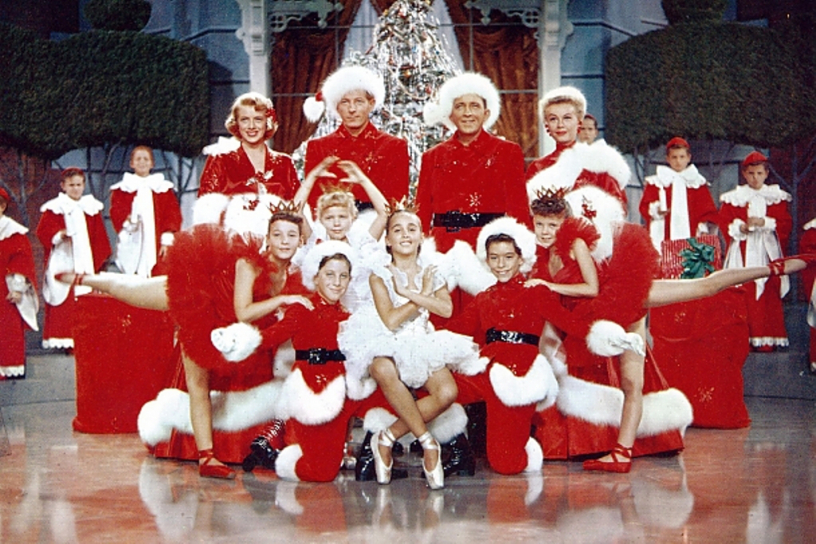
Finally Paramount gave Crosby a big budget musical and didn't rely on his charm and personality to carry the film. The budget went to hire such outside talent as Fred Astaire and Irving Berlin. And none of them disappoint.

In the first of two films Astaire and Crosby did together the characters are remarkably the same. Astaire is the elegant and charming show business professional who's ambitious for success. Crosby is the talented, but lazy partner who just wants a life of ease and comfort and not to work more than he has to. Small wonder that their double act broke up. But now enter a complication. They both get interested in the same girl who in this film is Marjorie Reynolds.

Crosby dreams up the idea of a nightclub/hotel called Holiday Inn where they only work on holidays. He wants Reynolds to help with the shows there. Astaire wants her for his act after his other girl partner Virginia Dale runs off with a millionaire. And the fun starts. Now since this was Crosby's home studio and he's first billed, just who do you think gets Reynolds in the end? As maid Louise Beavers put it, don't sit and mope because some slicker stole your gal.


Irving Berlin writes a majority of new songs to supplement a couple from his vast trunk of songs mostly about our holidays. By that time Berlin had extracted an agreement which became standard for all the films he wrote for. Not one note of non-Berlin music is ever heard in a score he writes. Just listen to this and just about any other film Berlin is associated with. Even music in the background is his.

The hit song in this was supposed to be Be Careful It's My Heart, the Valentine's Day song, sung by Crosby and danced to by Astaire and Reynolds. It did have a good deal of success. But the success of White Christmas was exponentially phenomenal. It netted Irving Berlin his one and only Academy Award and for Bing Crosby his number one item on vinyl. In fact everyone's number one item on vinyl.

I don't know if Bing Crosby ever set out to become the voice of Christmas, but if he did he was a marketing genius. If he's known and appreciated for anything with today's audience, it's for that. White Christmas became the first Yule song he was identified with although he had recorded some Christmas material before that. After this he started doing the holiday music in serious. Just think, along around Columbus Day, record companies even now reissue his Christmas stuff every year and his totals as largest selling recording artist in history grow once again. That's why the Beatles and Elvis, etc. don't have a prayer of overtaking him.


In fact White Christmas's initial success was so great that Decca wore out the original master putting out records to meet the demand. So in 1945, Decca got Bing, the Ken Darby Singers and John Scott Trotter to re-record it almost note for note. The original 78 had White Christmas with the flipside of Let's Start the New Year Right also from Holiday Inn. The newer version which most people hear has as it's flipside God Rest Ye Merry Gentlemen.

I don't want to ignore Fred Astaire's contribution here. He does a nice comic turn with I Can't Tell a Lie, the Washington's birthday number where Crosby keeps changing the tempo to upset him and Reynolds. The Fourth of July yields a number for each. Reynolds is kept from the show by Bing's machinations and Astaire has to "improvise" something. He "improvises" Firecrackers and anyone who knows anything about Astaire knows how hard he worked to get that spontaneous feeling in his dancing. Bing sings The Song of Freedom, reminiscent of James Cagney's Grand Old Flag number from Yankee Doodle Dandy also out in 1942 and Song of Freedom is also reminiscent of what Paramount could have given Bing in the 1930s had they hired someone like Busby Berkeley to give Bing some of the production numbers that Dick Powell had at Warner Brothers.

So what more is there to say, but sit back and enjoy the fun...

BRUCE RATING: 10 OUT OF 10
MY RATING: 10 OUT OF 10


Wednesday, July 25, 2018

GUEST REVIEWER: THE EMPEROR WALTZ

Our resident reviewer Bruce Kogan is back to review Bing's 1948 film The Emperor Waltz. I have to admit it's not one of my favorite films, but I might have to give it another viewing soon...

According to a new book out on Billy Wilder, Wilder had a much different film in mind than what emerged here. He was a contract director for Paramount at the time this was made with a few hits under his belt. And he was assigned to direct this film with Bing Crosby who was the biggest name in movies when this came out.

Crosby had a whole different film in mind and what Bing wanted Paramount gave him at that point. Wilder wanted a biting satire on the Franz Joseph court and he also wanted a the killing of the puppies, the offspring of Crosby's and Joan Fontaine's dogs to be an allegory for genocide. Crosby knew what his audiences expected from him and he opted for a lighter treatment.


The result was a second rate Billy Wilder movie, but a first class Bing Crosby film. Unlike in the thirties when Paramount just depended on Crosby's personality to put over a film, they gave this one the full A treatment. The outdoor sequences were shot in the Canadian Rockies and they serve as a great Alpine background. Though its muted, Wilder still gets some of his cynical point of view into Crosby's phonograph salesman who woos a member of Viennese royalty played by Joan Fontaine. Roland Culver who is Fontaine's father is also pretty good as the impoverished count who is quite willing to sell his title in marriage to anyone who can afford him.

Great vehicle for the winning Crosby personality...

BRUCE'S RATING: 8 OUT OF 10
MY RATING: 7 OUT OF 10


Friday, November 17, 2017

GUEST REVIEWER: MAN ON FIRE


Bing Crosby guru Bruce Kogan is back with another review. This time it's the overlooked 1957 drama Man On Fire...

The movie opens with Bing Crosby singing the Sammy Fain-Paul Francis Webster title song over the opening credits. But that's all you hear from Crosby the singer. For the first time Bing starred in a film without any singing at all.

The story involves a pair of divorced parents who have fallen out of love and are contesting the custody of their son. Crosby the father has the kid and wife Mary Fickett and her new husband Richard Eastham want him.

It's a well acted film and Crosby proves he doesn't need to sing to carry a film. His Earl Carleton is a troubled man, a loving father wounded terribly by the divorce. Mary Fickett is a loving mother who's been denied custody of her son by a hastily signed agreement at the time of her's and Bing's divorce. Her new husband Richard Eastham wants a share of custody for his wife's sake.


The point is that this is a film without villains. These are just good people caught in a bad situation trying to do the right thing as they conceive it. And in probably the best performance of her long career, Judge Anne Seymour has to decide it. The custody hearing scene in her chambers is the best acted scene in the film.

This situation may have inspired some of the situations portrayed in the current series Judging Amy. The film has an honored place in the films of Bing Crosby. A must see.

BRUCE RATING: 8 OUT OF 10
MY REVIEW: 9 OUT OF 10


Sunday, December 18, 2016

GUEST REVIEWER: WHITE CHRISTMAS

Bruce Kogan is back with a review of the yuletide classic White Christmas...

By 1954 the song White Christmas had become such a timeless classic that it was inevitable that a film would be made around it. And of course the star would be none other than Bing Crosby. But who to star with him.

Originally this was to be the third Irving Berlin outing for Bing and Fred Astaire. Then Donald O'Connor was to co-star, but finally Danny Kaye teamed with Der Bingle. Proved to be a felicitous combination.

By then Rosemary Clooney had worked in a few films well and more importantly, she had clicked with Crosby on the radio. Bing had teamed with several girl singers over the years, like Connee Boswell, Frances Langford, Mary Martin, Trudy Erwin, Carole Richards, Peggy Lee and a trio of sisters named Andrews. But he always said Rosemary Clooney was it for him and besides Mary Martin, the only other one who did became a leading lady for him.

It's not remembered because of the success of her solo career, but Rosemary Clooney started as a duo with her sister Betty who retired early to raise a family. So with Vera-Ellen as her sister in the movie, that was an aspect of the plot Rosemary could handle with ease.


The plot such as it is involves Bing and Danny as a song and dance duo who've expanded into the production end of show business. Through a little bit of a con game worked by Vera Ellen, the two meet a singing sister act like the Clooney sisters were. The sisters turn out to be headed to Vermont to work at a resort and the smitten guys go along with them.

Problem is there ain't any snow there. It's an unheard of 68 degrees Fahrenheit in early December. And the place is owned by Crosby and Kaye's former commander from World War II, played by Dean Jagger. He's about to lose his shirt and his pride. So our intrepid quartet go to work.


Irving Berlin's score for White Christmas is about half new songs and the other half from previous scores. That's how it was when you got Irving to work for you. Listen carefully even to the background music. You will not hear one note of a non-Berlin song.

One of those songs was a personal favorite of mine, Count Your Blessings Instead of Sheep. I recall in grade school in Brooklyn it was a song that the teachers had us sing in the school assemblies. Little did I know that it was introduced by the guy who proved to be my favorite entertainer. It's a patented philosophical Bing Crosby song that he did best and it serves as a ballad to woo and win Rosie. Bing sings it and then Rosie joins him in the reprise.

Danny Kaye has two good numbers. The first The Best Things Happen While Your Dancing is clearly originally for Fred Astaire, though Kaye and Vera Ellen make a lovely couple on the dance floor. The Choreography number I think was also done for Astaire, but here dancer John Brascia does the complicated dance routine while Kaye sings. I'm sure Astaire would have handled both jobs had the film been made with him.

All the stars do the Minstrel Show/Mandy number, but Vera Ellen really shines in it. She was a great dancer, really sparkled in every film she did.


Besides Sisters, Rosemary Clooney has a grand torch ballad that sold a few platters for her in Love, You Didn't Do Right By Me. She had a wonderful singing voice and the most impeccable diction of any female singer ever. You don't miss one throbbing word on any of her ballads.

White Christmas was Paramount's first film done in their wide screen process called VistaVision. And of course it was proper that their number one star for over 20 years be in this film. Of course jokes about Bing's derrière and the wide screen got into the repertoire of a certain comedian named Hope.

Just like the song that inspired it, White Christmas has proved to be a timeless holiday classic and will remain so...


BRUCE'S RATING: 9 OUT OF 10
MY RATING: 10 OUT OF 10


Monday, October 10, 2016

GUEST REVIEWER: RHYTHM ON THE RIVER

Guest reviewer Bruce Kogan is back to take a look at the forgotten 1940 musical gem - Rhythm On The River...

Poor Basil Rathbone, an egotistical composer who's lost his muse. He's been faking it for some time, buying his lyrics and his music from various sources. Trouble is that two of the sources (Bing Crosby music) and (Mary Martin words) happen to meet and fall in love. And then they discover what they've been doing. Complications ensue, but all is righted at the end.

Crosby and Martin sing terrifically. Mary had signed a Paramount contract and also at the same time doubled as a regular on Crosby's Kraft Music Hall Radio Show. For reasons I don't understand, movie audiences didn't take to her, so she went back to Broadway and did One Touch of Venus in 1944 and stayed there.

Basil Rathbone in one of the few times he played comedy does it very well. His ego is constantly being deflated by sidekick Oscar Levant and again I'm surprised they didn't do more films together.

As in most of Crosby's Paramount vehicles, no big production numbers, but the title tune being done as an impromptu jam session in a pawn shop is cinematic gold. It shows what great rhythm Bing had. Good job by all.

Billy Wilder is co-credited for the story, and his unsentimental touch is noticeable in this quite original tale of ghostwriting songwriters who both work for burnt-out music legend Oliver Courtney. The obvious misunderstandings are gotten out of the way quite quickly, thank heaven, and what remains is a witty and breezy concoction with some fine songs (and some more forgettable ones).


Crosby at his most charming, a great turn by Broadway legend Mary Martin and Basil Rathbone and Oscar Levant providing most of the cynical barbs (Levant is in rare form and his quips haven't dated at all). Martin's singing gives hope and question to the ironic fact that she never scored in movies, given four years to try and make it at Paramount before giving up and returning to Broadway where she had greater luck. Crosby is his easy going self as usual, dropping deadpan lines like a dog with a bone after realizing that nothing else remained to gnaw on. A delightful surprise, and recommended for all fans of the genre.

A surprisingly original plot and great entertainment...

BRUCE'S RATING: 9 OUT OF 10
MY RATING: 9 OUT OF 10


Monday, April 25, 2016

GUEST REVIEWER: DR. COOK'S GARDEN

Here is another review from our resident Bing Crosby guru Bruce Kogan. This time around he is reviewing a very different Bing film. It is actually the television movie Dr. Cook's Garden, which was a very excellent film if you can find a copy...

I'm sure that this was not intended to be Bing Crosby's swan song to feature films, but that's what it turned out to be.

Crosby is cast against type here. He's the kindly old country doctor in this story who lives and practices in a Norman Rockwell like small town. But Crosby is the town's terrible secret. Unbeknownst to the residents, old Doctor Cook has been euthanizing those he feels have no positive contribution to make. The old mostly, but even younger ones like a crippled child whose medical bills are breaking his parent's finances. A young colleague, Frank Converse, discovers what he's doing and the rest you have to see for yourself.

Burl Ives had played the role briefly on stage, and actually got good reviews (the play seemed too slight to the critics, and to New York audiences). The story is this: Frank Converse is Dr. Jimmy Tennyson, who is returning to his small home town to work with the man whom he always admired the most, Dr. Leonard Cook (Bing). Cook is the ideal small town doctor (reminiscent of his young doctor who goes to the New England Town to assist Barry Fitzgerald in WELCOME STRANGER). He is warm and kindly, and full of common sense. He also has a green thumb, being usually in his personal garden when not with his patients. So Converse is very happy to be working with his emotional/educational mentor.


But in now working closer with Cook, Dr. Tennyson begins to notice that there are some odd deaths that accrue in the town. People will ask Cook to come in for some minor cold or something like that, and will be dead in twenty four hours. Tennyson soon begins to notice that the people who die so suddenly are not really mourned. His girlfriend, Janey Raustch (Blythe Danner), points out that many of them were notoriously bad tempered neighbors, cruel to their families or to pets or other people, or drunkards who made life hellish for others, and so they aren't missed. Eventually Tennyson starts questioning Cook, and after some attempts at shrugging off Tennyson's questions Cook begins to admit that the not-to-loved departed were possibly sped on their way with Cook's assistance.

Tennyson is (naturally) astounded to hear that Cook has been poisoning (with overdoses of morphine and other drugs) these patients. Cook looks upon the town as a grander version of his garden, and these bad people as the equivalent of the weeds that he removes from his real garden.


The tension in the story is how Tennyson finds the growing number of dead "bad" people affecting his own conscience, and how his uncertainty is effecting his relationship with Cook, who is beginning to wonder if Tennyson is another weed to remove.

It's an interesting vehicle for a man who was known as THE Catholic entertainer. And it has Bing's one and only screen death in his career. Solid acting by Bing and the cast....

BRUCE'S RATING: 7 OUT OF 10
MY RATING: 10 OUT OF 10


Monday, February 22, 2016

GUEST REVIEWER: THE ROAD TO HONG KONG

Bing Crosby guru is back with another one of his fine reviews. This time up he reviews the last "Road" movie that Bing and Bob Hope made - The Road To Hong Kong (1961). The Road was getting a little beat up by the time that this movie was made...

This turned out to be the end of a great cycle of comedy films. Two mega-individual stars, pooling their talents to come up with comedy classics.

Since this was the only Road picture not done on the Paramount lot it has a whole different feel to it and not for the better. Unfortunately the decision was made to dump Dorothy Lamour from her traditional role as sex object for Crosby and Hope to pant over. Joan Collins was years away from her career role as Alexis Carrington. Here she's just not into the same spirit of things that Dotty was. Dotty was brought in and did one of her numbers Warmer Than A Whisper towards the end of the film.

It's been pointed out that 29 year old Collins looked ridiculous falling for 58 year old Crosby. I can see the case for it, but I would remind everyone that four years earlier, Bing in fact took as his second wife, a woman with just such an age difference.

One of the inside jokes of the film was that Hope's name in the film was Chester Babcock which is the birth name of Jimmy Van Heusen who wrote so many film scores for Crosby. Van Heusen and Sammy Cahn contributed a ballad for Bing dueted with Collins called Let's Not Be Sensible. And Bob and Bing get two patter numbers, Teamwork and the title tune. There's a lot less music in this outing and that's not for the better of the film.


Still the film has some good comedic moments the best of which involve a hilarious scene in a Hindu doctor's office with an unbilled Peter Sellers as the doctor. The doctor advises Hope to take a cure for amnesia at a hidden lamasery, a la Shangri La, where they find David Niven committing Lady Chatterley's Lover to memory. And at the end when the boys and Collins arrive on another planet in a surreal ending they find Frank Sinatra and Dean Martin waiting for them.

Among the rest of the supporting cast Robert Morley as a mad scientist and chief villain and Felix Aylmer as the Grand Lama stand out.

Before Crosby died in 1977, he Hope and Lamour and signed to do still another film entitled Road to the Fountain of Youth. I wish it had been done. Road to Hong Kong is all right, but not up to the standards of those wacky days at Paramount...

BRUCE'S RATING:6 OUT OF 10 STARS
MY RATING: 5 OUT OF 10 STARS

Monday, November 9, 2015

GUEST REVIEWER: HERE COMES THE GROOM

Our guest reviewer Bruce Krogan is back with his usual excellent review. This time around it is the second pairing of Der Bingle and director Frank Capra in 1951's Here Comes The Groom...

Frank Capra in his autobiography called Bing Crosby, "the master of the cultured ad-lib." A lot of time Crosby would drop several ad-libs into a script and Capra kept them in. According to Capra they were better than what the screenwriter had written. Of course partnering with Bob Hope in several films and thousands of radio, television, and live shows Bing had to be quick on the uptake.

Capra wanted to do another of his populist films like Mr. Deeds etc., in the three picture deal he signed with Paramount. But after doing Riding High and doing it well with Bing Crosby, he wanted to do one of his type film. The Paramount brass said no, but since he was unhappy at Paramount they agreed to drop their last picture commitment on his contract for one more Crosby film. Just make a good one.

Capra was as good as his word. This film is entertainment plus and a lot of that has to do with the chemistry between Bing and Jane Wyman. Most of Crosby's leading ladies were nice women who just melted with the Crosby charm. Not so here. Ms. Wyman gives as good with the wisecracks as Crosby does and is no pushover. What she is here is a fiancé who's grown tired of waiting for her man who's out gallivanting all over the world as per his job as correspondent. When he finally does come back he has two French orphans in tow. But Jane's decided to marry millionaire Franchot Tone. Bing has to get her back or those kids will be deported. That's where the fun starts.


By now Paramount was giving Crosby vehicles some respectable budgets and that included letting Frank Capra hire a lot of his favorite supporting players. Those folks make a Capra film an enjoyable experience.

Franchot Tone does nicely as millionaire rival and critics were astounded at Alexis Smith who turned out to have a real flair for comedy. Funny parts she wasn't getting at Warner Brothers. She plays a "kissing" cousin of Franchot Tone and figures prominently in Bing's machinations.

They were also astounded at Jane Wyman who nobody realized could sing. Why they were is beyond me since she did start in musical choruses. The song In the Cool Cool Cool of the Evening by Hoagy Carmichael and Johnny Mercer won an Oscar for best song and became one of Bing's million selling records, dueted with Jane Wyman on screen and on vinyl.


The rest of the score is by Jay Livingston and Ray Evans who were under contract to Paramount and for some reason or other never wrote another Crosby film score. Probably because Paramount didn't assign them because many years later they scored and arranged a whole album of duets with Bing and Rosemary Clooney called That Traveling Two Beat Time. And Bing did pretty good with a song written for his friend Bob Hope by them called Silver Bells.

One of the Livingston-Evans songs was a patented philosophical number called Your Own Little House. A nice song on record, on screen it's a great impromptu style number that so many of Crosby's seemed to be. Sung with a group of kids who are French war orphans, Bing does some gentle kidding of fellow entertainers Jimmy Durante and Maurice Chevalier.

This is one of Bing's best and great entertainment...

BRUCE'S RATING: 9 OUT OF 10
MY RATING: 9 OUT OF 10


Monday, August 17, 2015

GUEST REVIEWER: HIGH TOR

Our resident Bing Crosby guru, Bruce Krogan is back with his review of the rare Bing television movie, High Tor...


High Tor is a musical adaption by Maxwell Anderson of his own drama of the same name. The play High Tor had a run of 171 performances in 1937 and had Burgess Meredith and Peggy Ashcroft starring in the roles that Bing Crosby and Julie Andrews took in this version. Additionally Anderson wrote the lyrics that Bing and Julie and the rest of the cast sang to Arthur Schwartz's music.

High Tor was an episode done for Ford Star Jubilee and it was a live broadcast of an original musical done for television. In watching a tape of the production, you would have to remember that this was still early television and in that the values were pretty shoddy, not at all what we are used to now. It's an outdoor story, the whole plot takes place on a mountain owned by Bing Crosby on the west bank of the Hudson River. It would better have been done on film with some nice location shots. It couldn't be done on the Hudson now though, what was feared at the time, commercial development, has come to pass.

Bing owns a mountain called High Tor and a couple of sharpies played by Hans Conreid and Lloyd Corrigan are trying to get it from him. Bing's fiancé played by Nancy Olson wants him to sell so they can start afresh somewhere else.


There's another group interested in the mountain. A group of marooned sailors who were left there by Henry Hudson who never came back for them are there, or at least their spirits are. Two of them are Everett Sloane and his daughter Julie Andrews. Henry Hudson on a later voyage was marooned on the bay that is named after him in Canada. I guess what goes around, truly does come around.

On a magical autumn night Crosby, the crooks, Olson, the Dutch sailor spirits, and a trio of bank robbers who robbed the bank in Nanuet all have a date with destiny on High Tor. If you think the play borrows a lot from A Midsummer Night's Dream, you'd be right.

Another reason that this is not better remembered is that no hit songs came from the score. That is a pity because it has some lovely tunes. Bing gets one of his philosophical numbers, Living One Day at a Time, a genre that was almost his alone. A favorite of mine is a ballad sung at one time by all the cast members, When You're In Love and there's a comic ode to a different kind of spirit, John Barleycorn.

Bing's rival Frank Sinatra had early done a live original musical adaption of Our Town in which his classic Love and Marriage came from. If Bing had a song that got that kind of acclaim from this score, High Tor would be a classic itself.

Since the story did involve ghosts some special effects that wouldn't have been available in a live TV broadcast also would have added to the production values.

Still if you can get the tape of the kinescope it would be a real viewing treat...

BRUCE'S RATING: 6 OUT OF 10
MY RATING: 7 OUT OF 10


Monday, June 15, 2015

GUEST REVIEWER: TOO MUCH HARMONY

Bing Crosby guru Bruce Kogan is back for another guest review of a Bing Crosby film. This time around he is reviewing the rare early Crosby film - Too Much Harmony from 1933...

This was Bing Crosby's third feature film on his new Paramount contract and by now Paramount discovered that they didn't have to put much production values into his films. Just give Bing some good songs to sing and the picture sells itself.

That was definitely the case here. Crosby was supplied with a nice score by Arthur Johnston and Sam Coslow that contained two of his early film hits, Thanks and The Day You Came Along. For Crosby fans that's enough recommendation right there.

However what makes the film sad is that this is a backstage story with enough opportunities to do some really nice production numbers. When you consider what Busby Berkeley was doing at Warner Brothers at the same time Paramount was making Too Much Harmony, this film comes off much the worse by comparison to any of Berkeley's work.

They gave Bing a nice supporting cast with Jack Oakie, Skeets Gallagher, Ned Sparks and Harry Green. Bing is caught between two girls in this one Judith Allen and Lilyan Tashman. Lilyan is the bad girl and gold digger that she is, you kind of wonder why Bing is bothering with good girl Judith Allen.


Judith Allen, I understand was the current inamorata of one of the Paramount studio bigwigs and he foisted her on this film. She's so bad she makes Ruby Keeler look talented. Her singing was as bad as Ruby and her acting was insipid. She didn't last long at Paramount, she was doing B westerns at Republic with Gene Autry by the end of the decade and dropped out of sight after that.

My favorite number in this takes place in a train boxcar where Bing, Ms. Allen and the rest of the cast gradually join in as Bing kids his image by singing All the World is Singing Buh boo boo boo. It has that very impromptu look that a lot of Crosby's best movie numbers have. Too bad he didn't make a record of it.

He did however make a record of another song from the film that he didn't sing in Too Much Harmony. An actress named Kiity Kelly does a lovely torch number called Black Moonlight. However Crosby did record it for Brunswick records like the other two numbers mentioned and it did enjoy a good sale considering this was Depression America. He always liked it and said so on his Musical Autobiography for Decca that came out a generation later. He said he hoped some of the newer generation of singers revived it. No one else has ever sang it to my knowledge...

BRUCE'S REVIEW: 7 OUT OF 10
MY REVIEW: 7 OUT OF 10


Monday, March 2, 2015

GUEST REVIEWER: WE'RE NOT DRESSING

Here is one of the great Bing Crosby guru Bruce Kogan with another Bing movie review. This time reviews the 1934 classic We're Not Dressing...

For those who've never seen Carole Lombard, but have heard about her genius for screwball comedy, go check out We're Not Dressing. Simple plot, Bing's a sailor on the Lombard yacht and he, Lombard, her uncle Leon Errol, her friend Ethel Merman and two princes/gigolos, Ray Milland and Jay Henry are shipwrecked after a drunken Leon Errol runs the yacht up on a reef. In order that they survive the sailor has to take charge and does. Oh, and also surviving is Lombard's pet bear, a creature named Droopy.

Droopy comes pretty close to stealing the picture, especially after Leon Errol persuades Crosby to put roller-skates on him while they're still on the ship. He also has another trick, he won't hear any other song but Goodnight, Lovely Little Lady one of the songs written for this film by Mack Gordon and Harry Revel.

Gordon and Revel's best known numbers from this are "May I" and "Love Thy Neighbor" which sold a few platters for Bing back in 1934. Soon after writing a score for another Crosby picture Two For Tonight, they moved over to 20th Century Fox where they scored some of Alice Faye's films.


Ray Milland in his autobiography "Wide-eyed in Babylon" recounts a tragic story during the filming of We're Not Dressing. The bear trainer gave specific instructions that any women whose time of the month it was were not to be on the set that day. One of them lied and the trainer was badly injured and later died of those injuries sustained at the paws of a super hormonally charged bear. He also said that Paramount signed him to a long term contract on the strength of that film.

The six castaways were not quite alone on the island. Burns and Allen were there also with their brand of surreal comedy. Hollywood never knew quite what to do with them. God knows they were funny as all get out, but rarely were asked to carry a whole film. 


Ethel Merman was another problem. Like her famous Broadway rival Mary Martin, she never quite made it in Hollywood. Her biggest success was always on Broadway. During the 1930s she would support, Crosby, Eddie Cantor, and most memorably Ty Power and Alice Faye and Don Ameche in Alexander's Ragtime Band. Her number "It's The Animal In Me" was cut from the picture, although it's briefly sung at the end. Paramount saved it and put it intact into their Big Broadcast of 1936 the following year.

At the time We're Not Dressing was shooting, Carole Lombard was romantically involved with Bing Crosby's singing rival crooner Russ Columbo. Columbo visited the set often and he and Crosby were friendly rivals and were known to do some impromptu singing during breaks. If only some sound man had left the microphone on. Columbo later died that year of a gunshot wound from an antique dueling pistol, a case that a lot of people felt was never satisfactorily solved.

So with Crosby, Lombard, Burns and Allen, Ethel Merman, Leon Errol just the sound of that casts spells some wacky wonderful fun...

BRUCE'S RATING: 8 OUT OF 10
MY RATING: 9 OUT OF 10